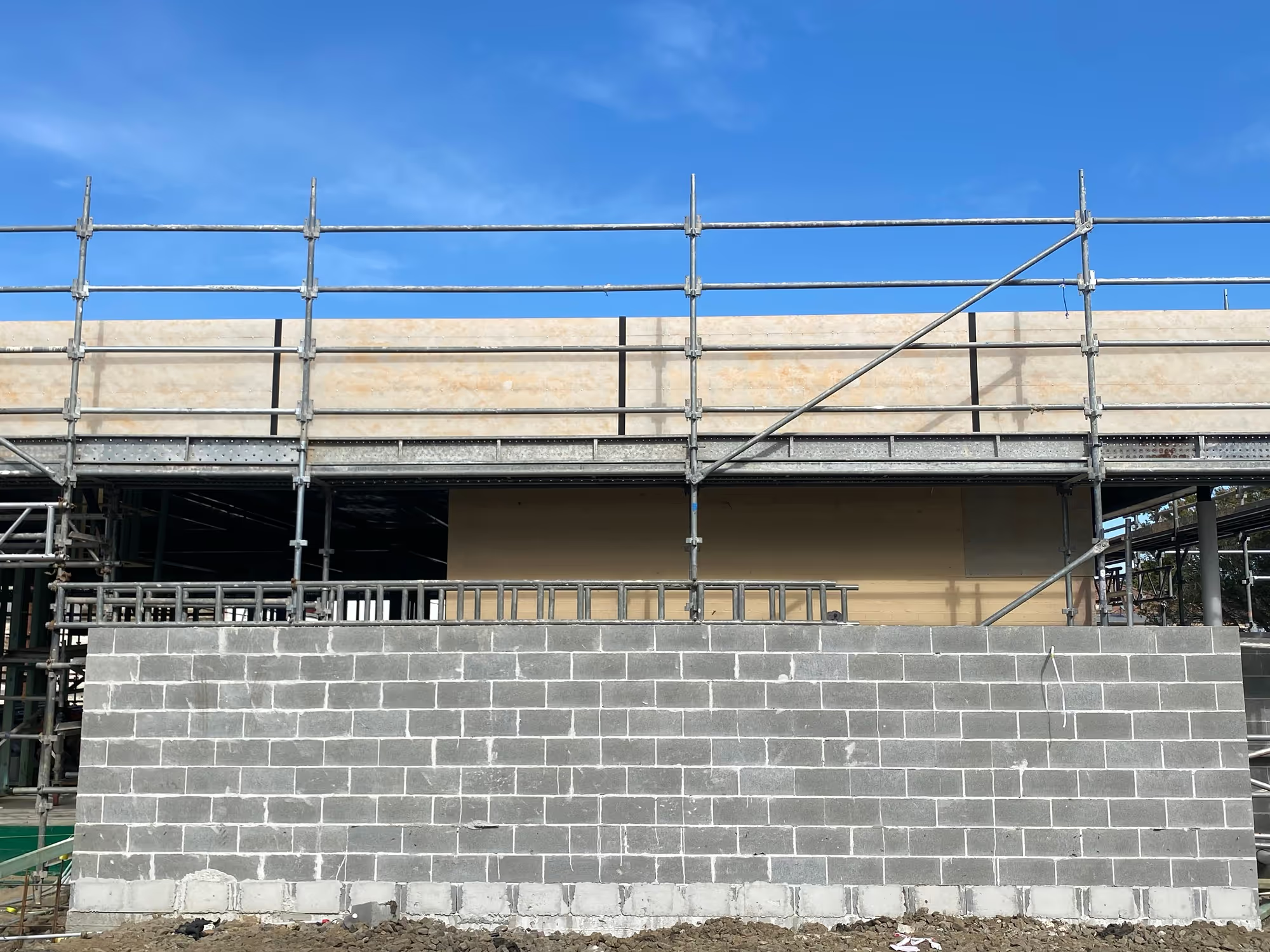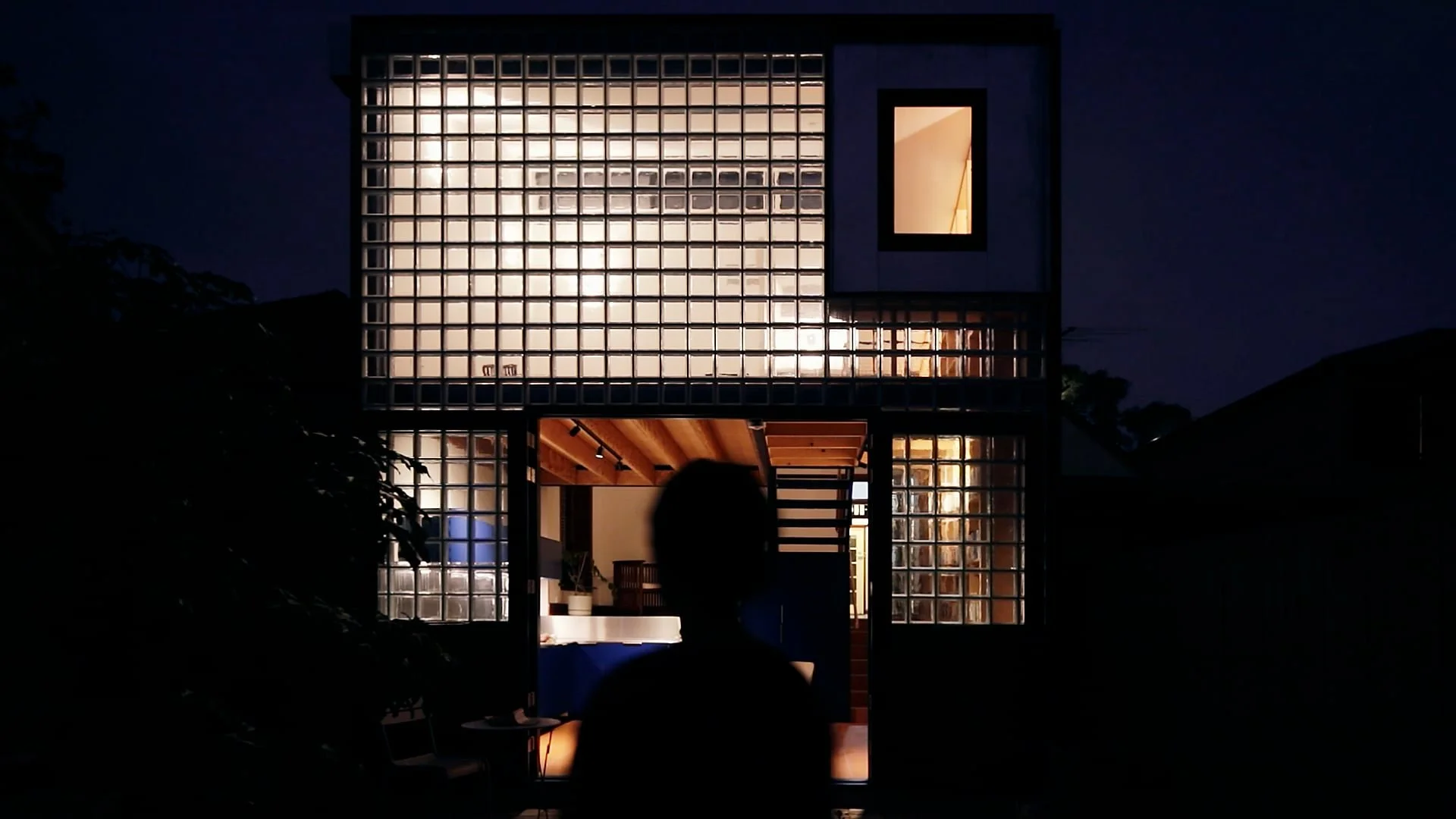
Glassbook House is a carefully crafted two-storey addition to a Federation-era home in Tempe, Sydney, designed as a sanctuary for reading, reflection, and quiet living. The project turns the simple act of reading into a spatial concept, placing a soaring two-storey bookshelf at the heart of daily life.
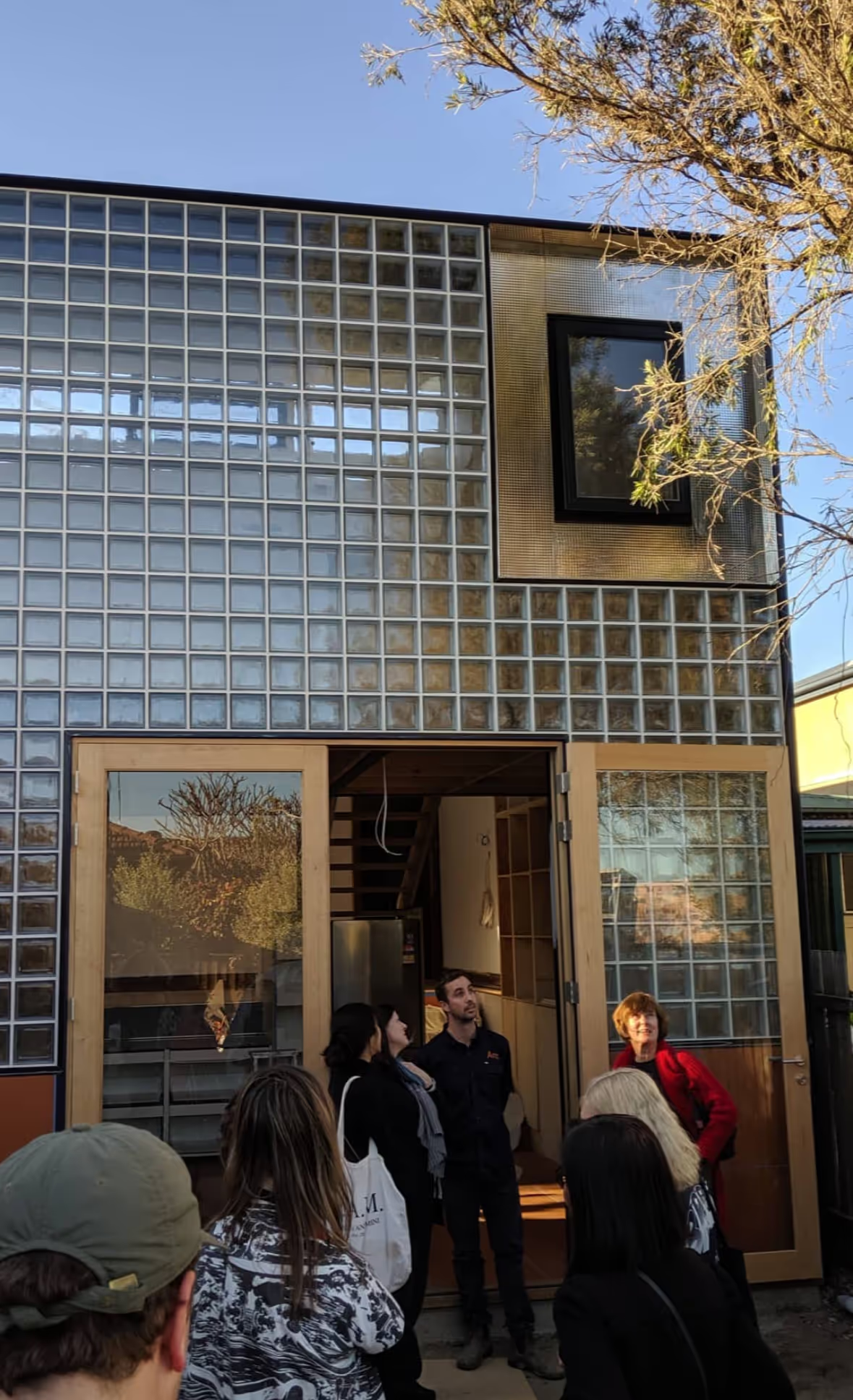
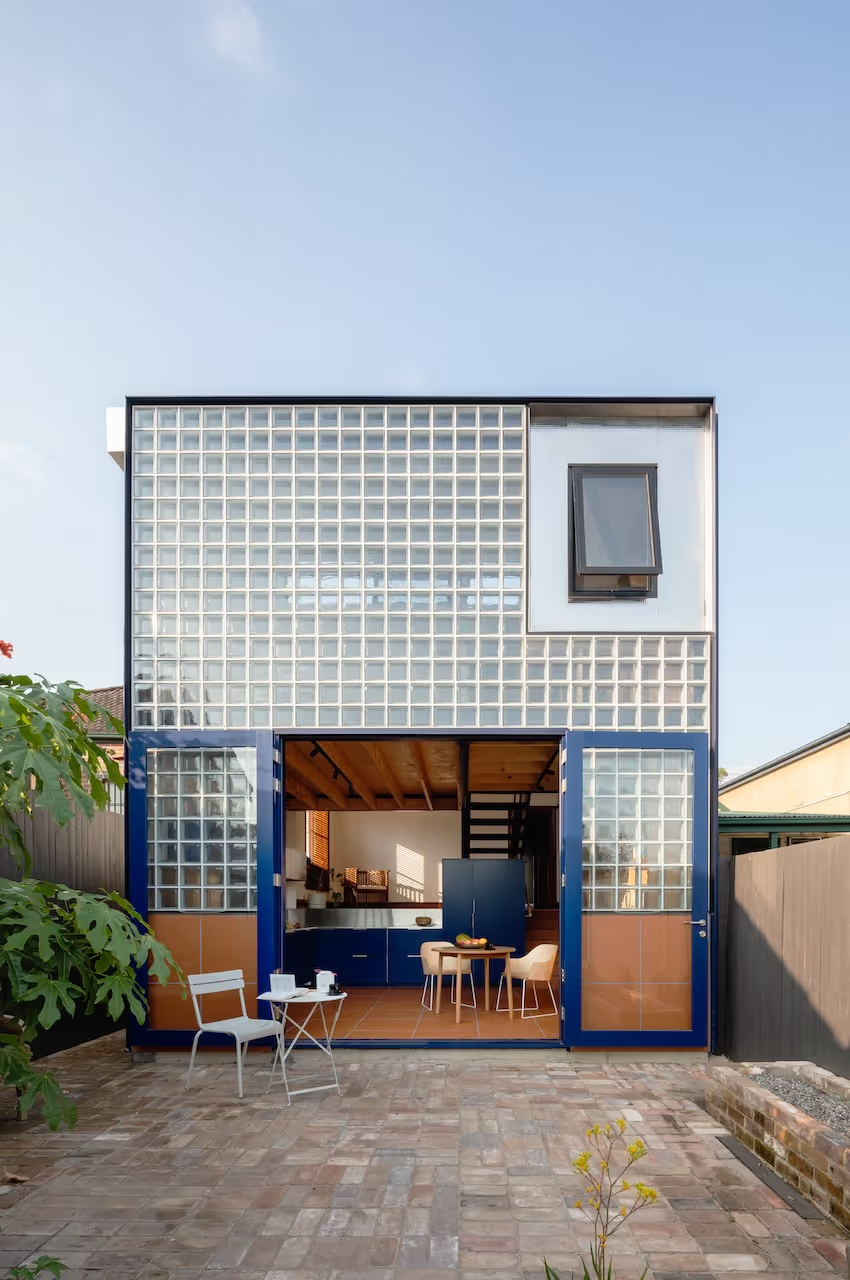
Arc. were able to deliver a highly detailed and technically precise build, from the double-height joinery to the custom glass-block facade. The facade is not just a design statement as it brings in filtered light, provides acoustic protection from nearby roads and flight paths, and maintains privacy without sacrificing brightness.
The structural bookshelf integrates beautifully with the existing home, as it incorporates new elements that respect and enhance the original decorative features. A reading nook framed by a feature window punctuates the glass wall, while open mesh flooring and carefully placed voids connect the upper and lower levels with both light and sightlines.
Type
Alterations and Additions
Architect
Sibling Architecture
Engineer
SDA Structure
Photography
Katherine Lu

Long Section
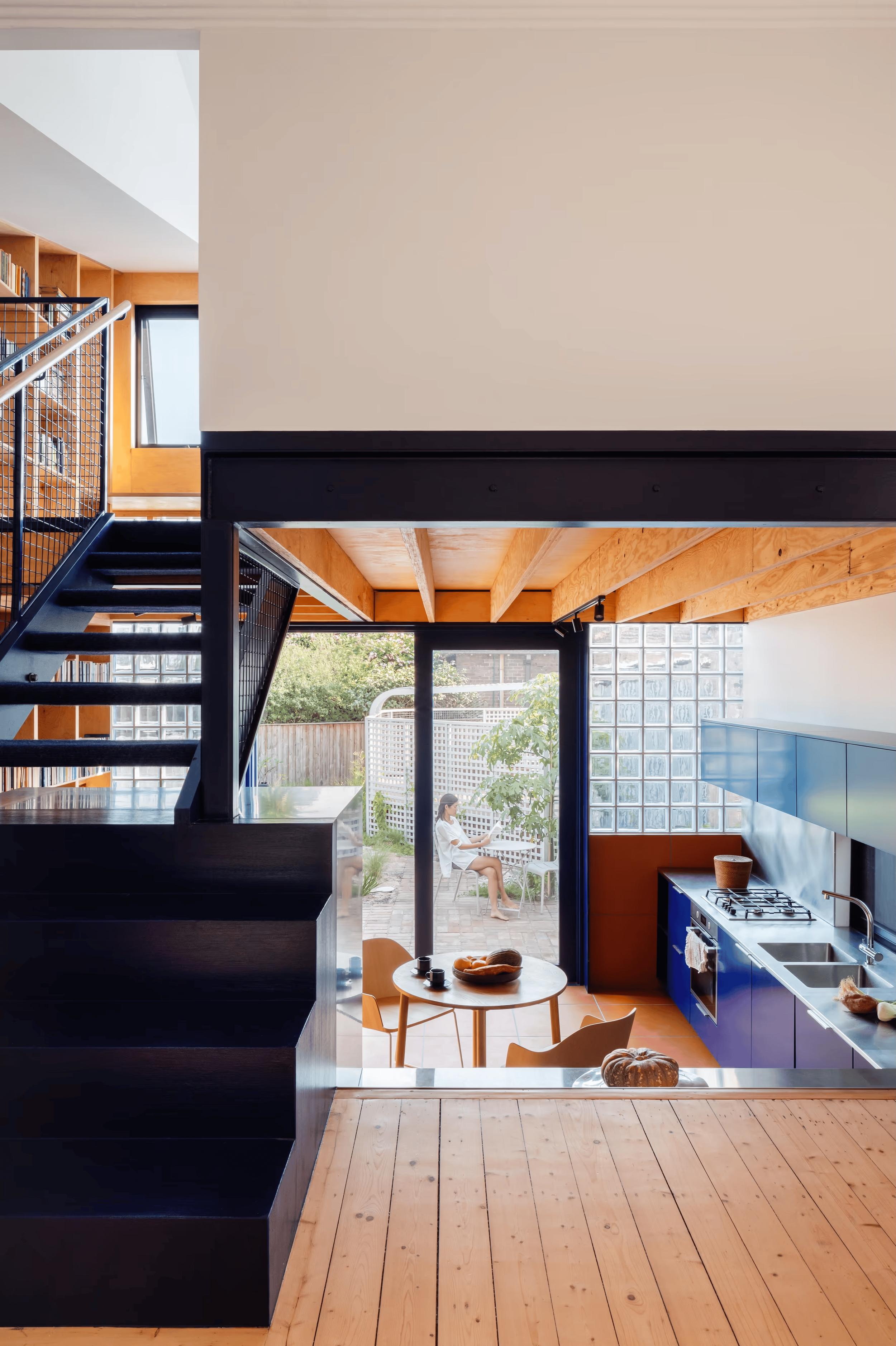
Contrasting features of the build.
01
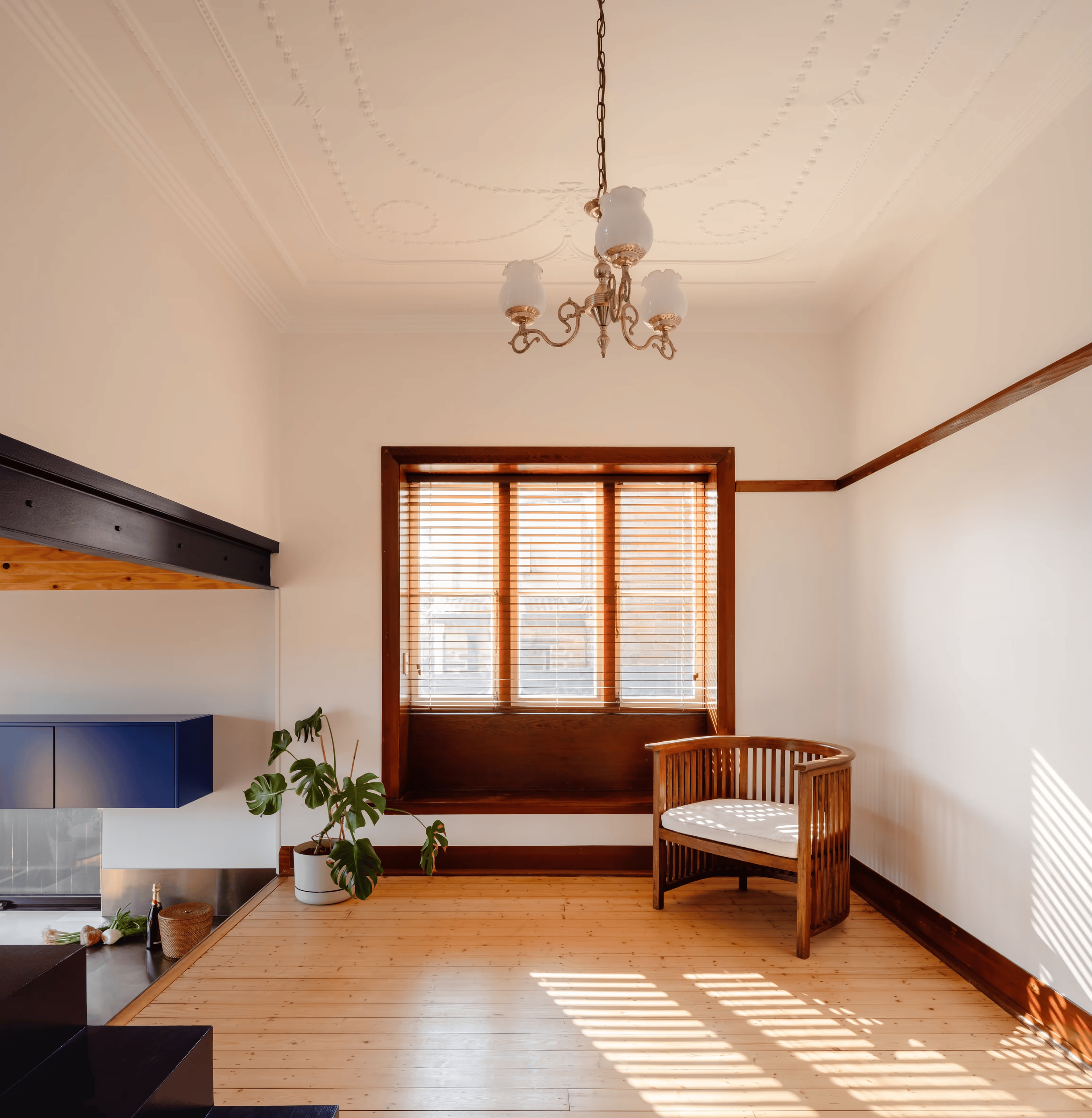
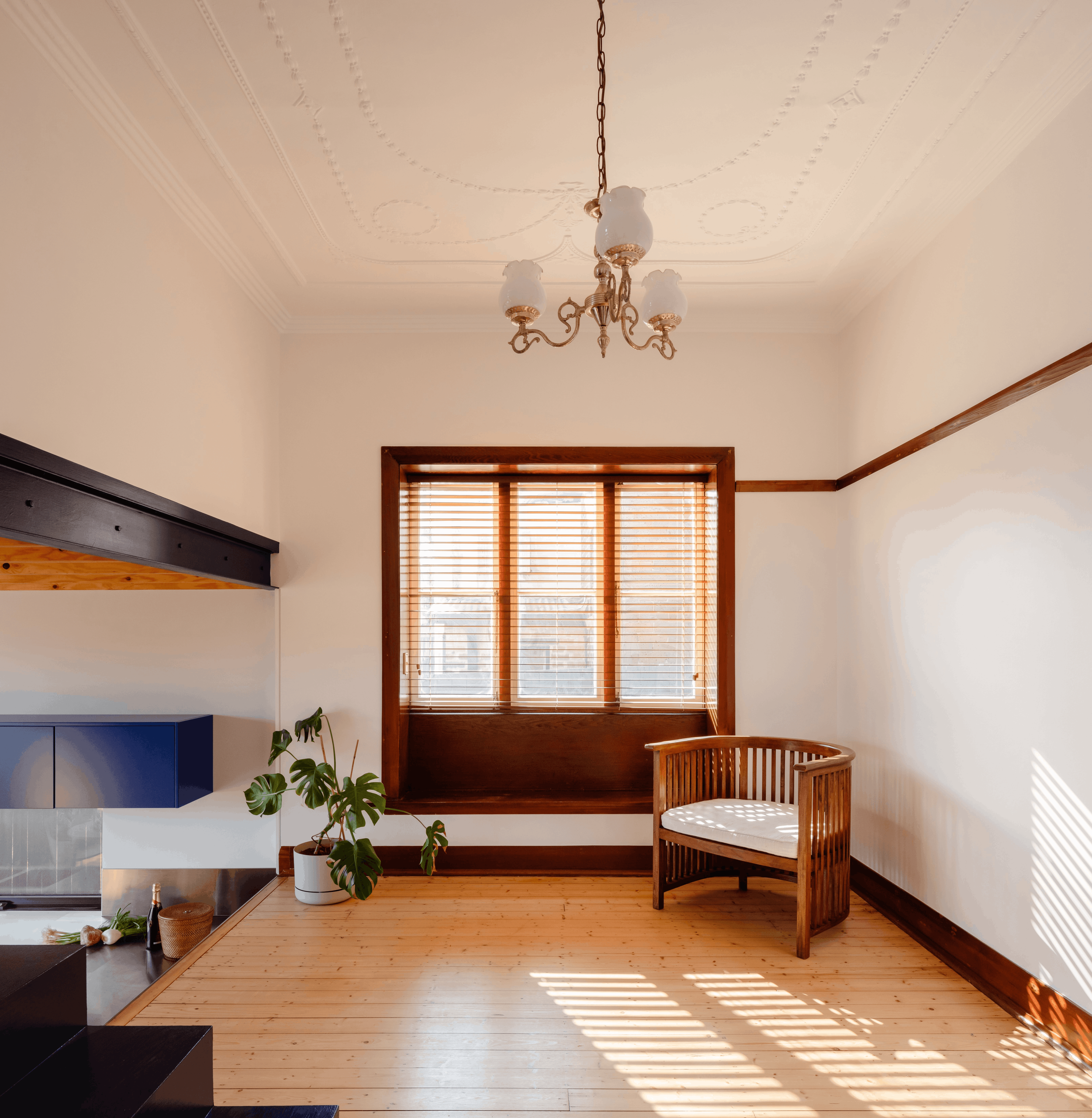
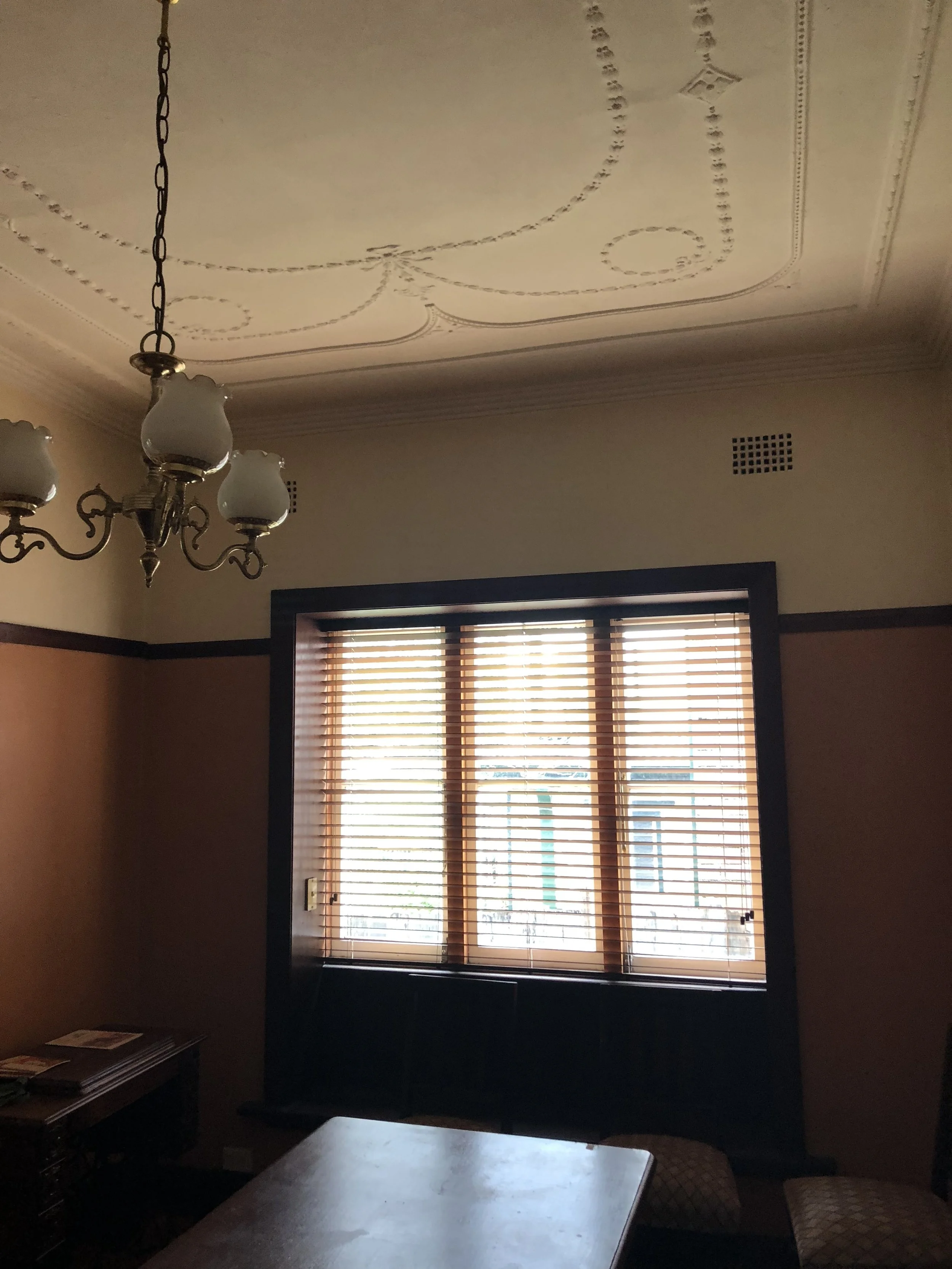
Original decorative ceiling retained.
02
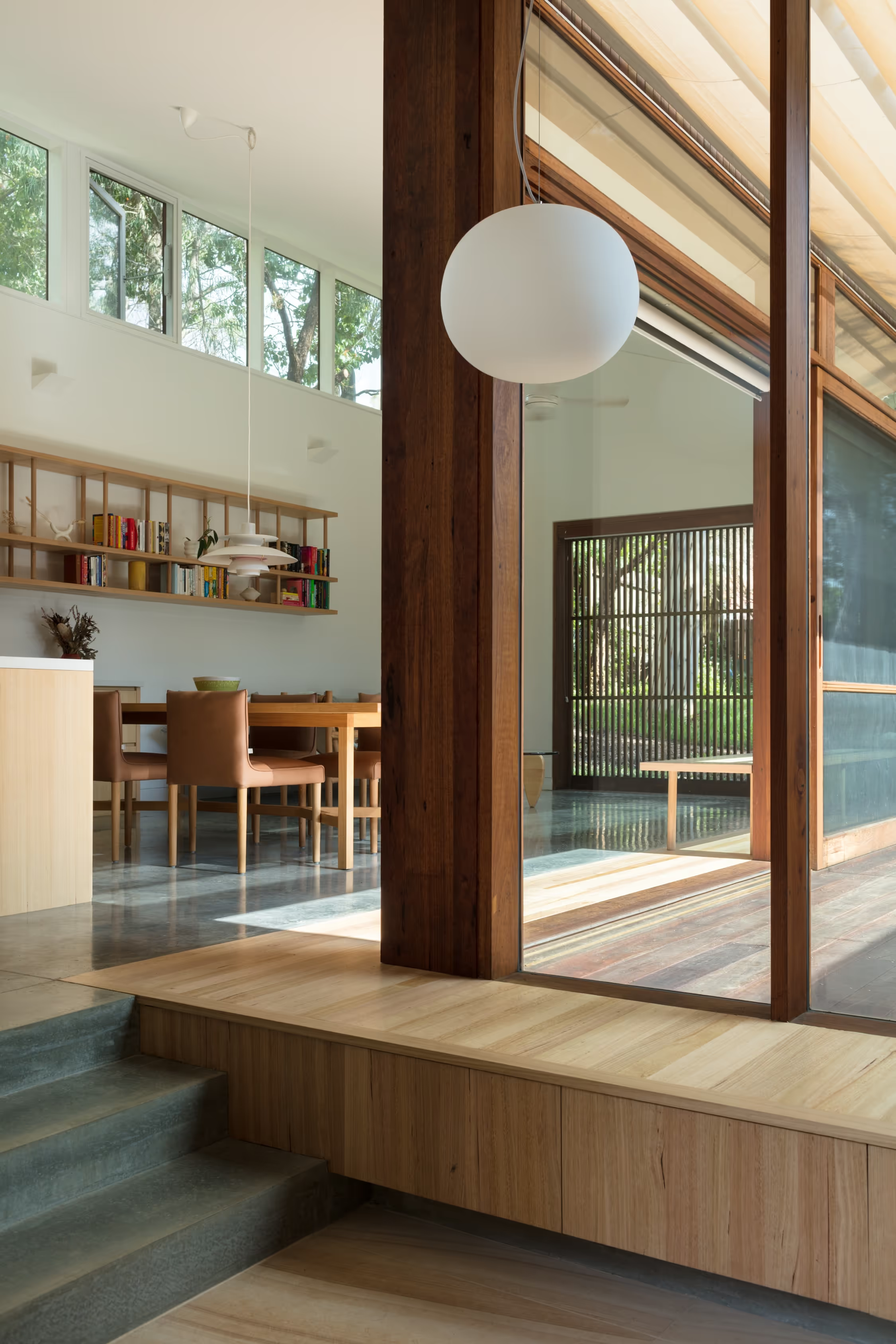
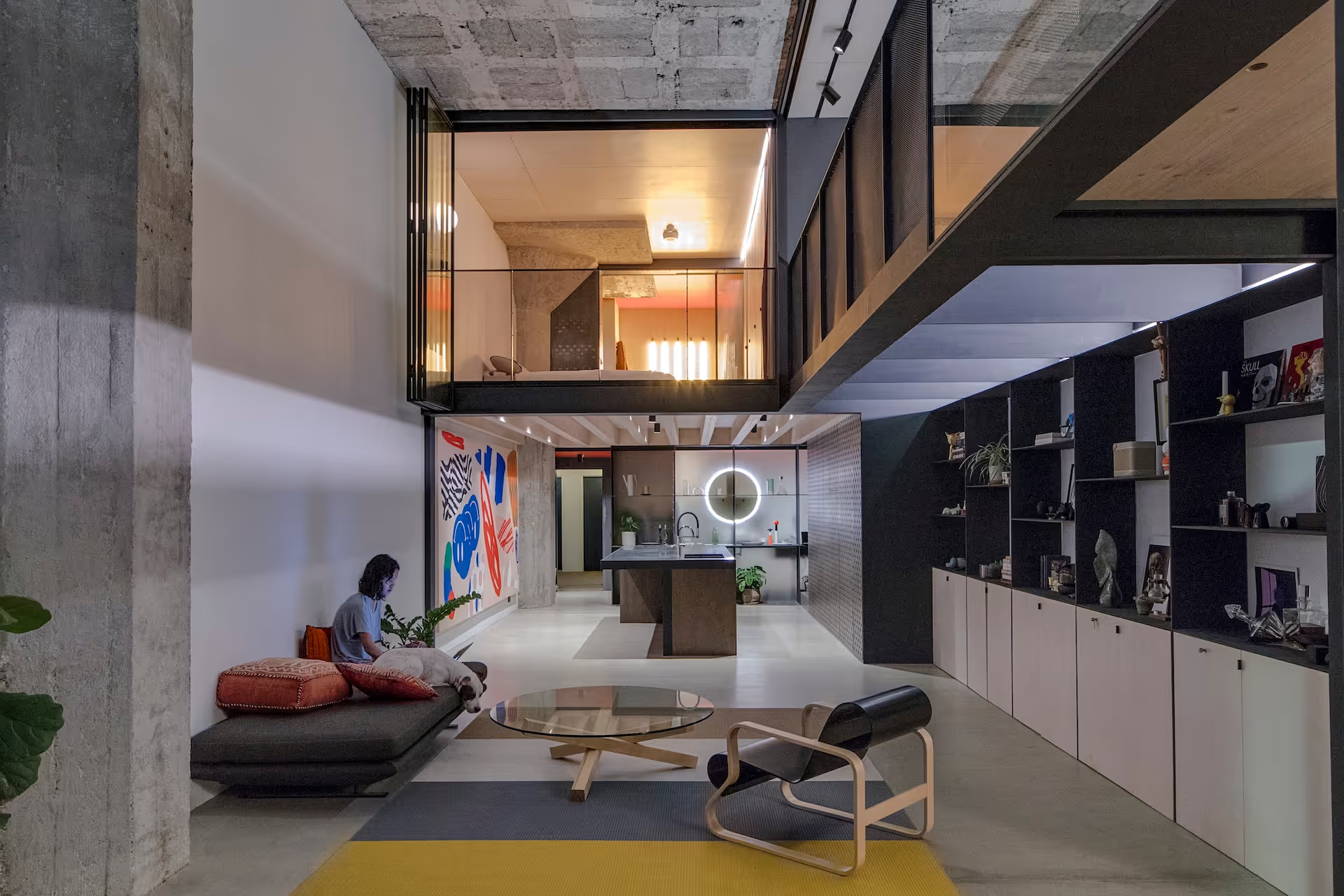
Mezzanine mesh allows the continual flow of the structural bookshelf.
04
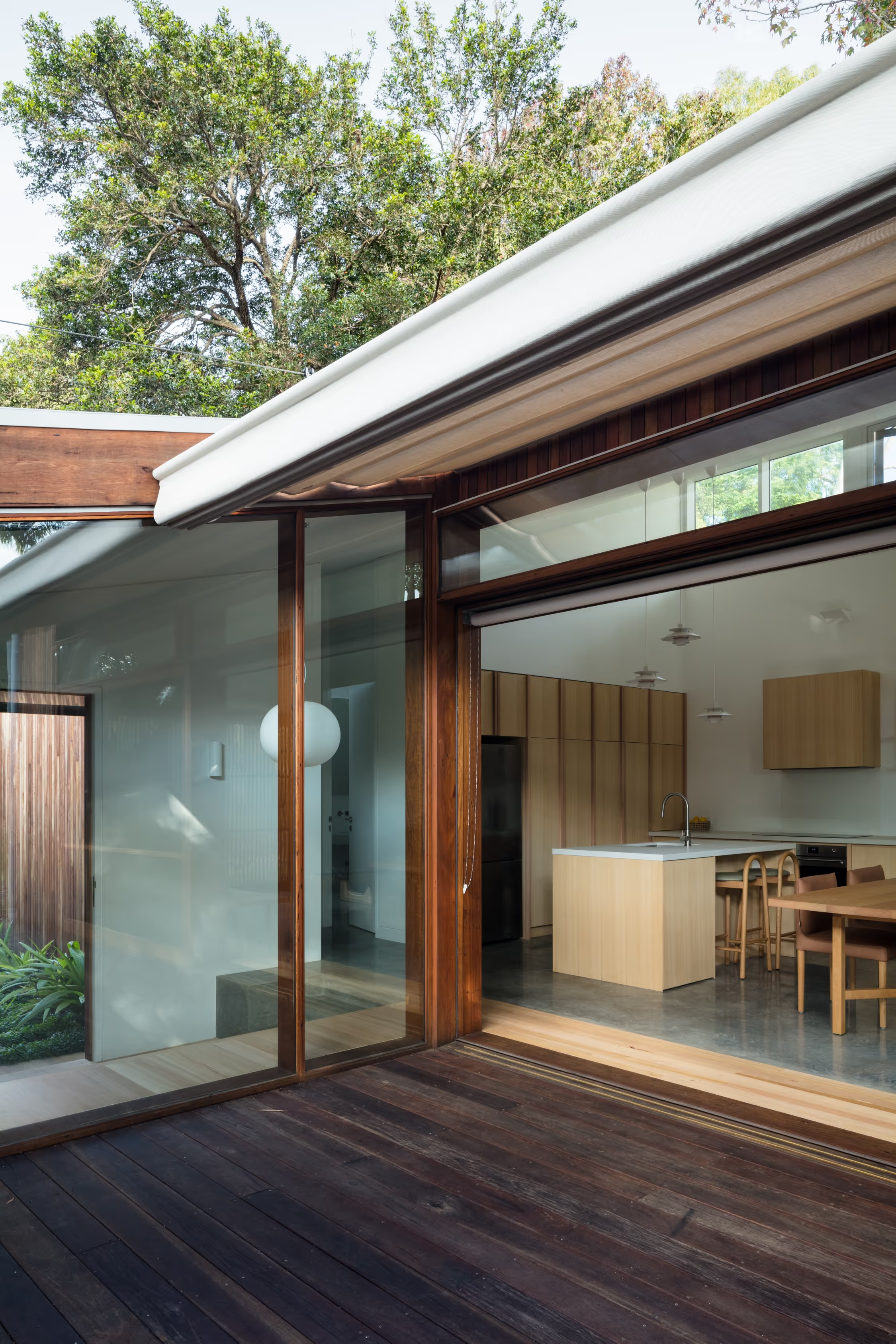
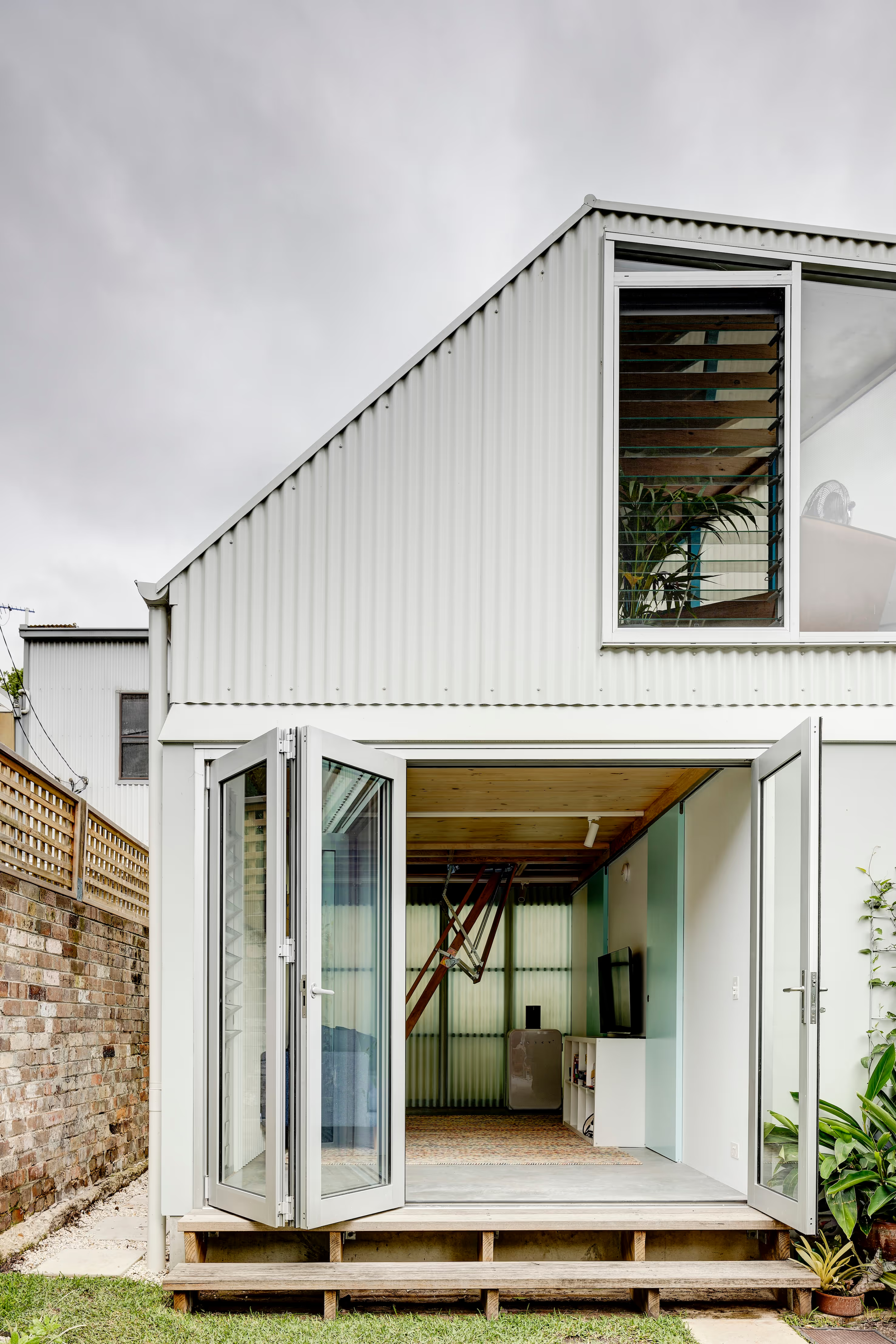
Natural light let in through the two double doors.
03
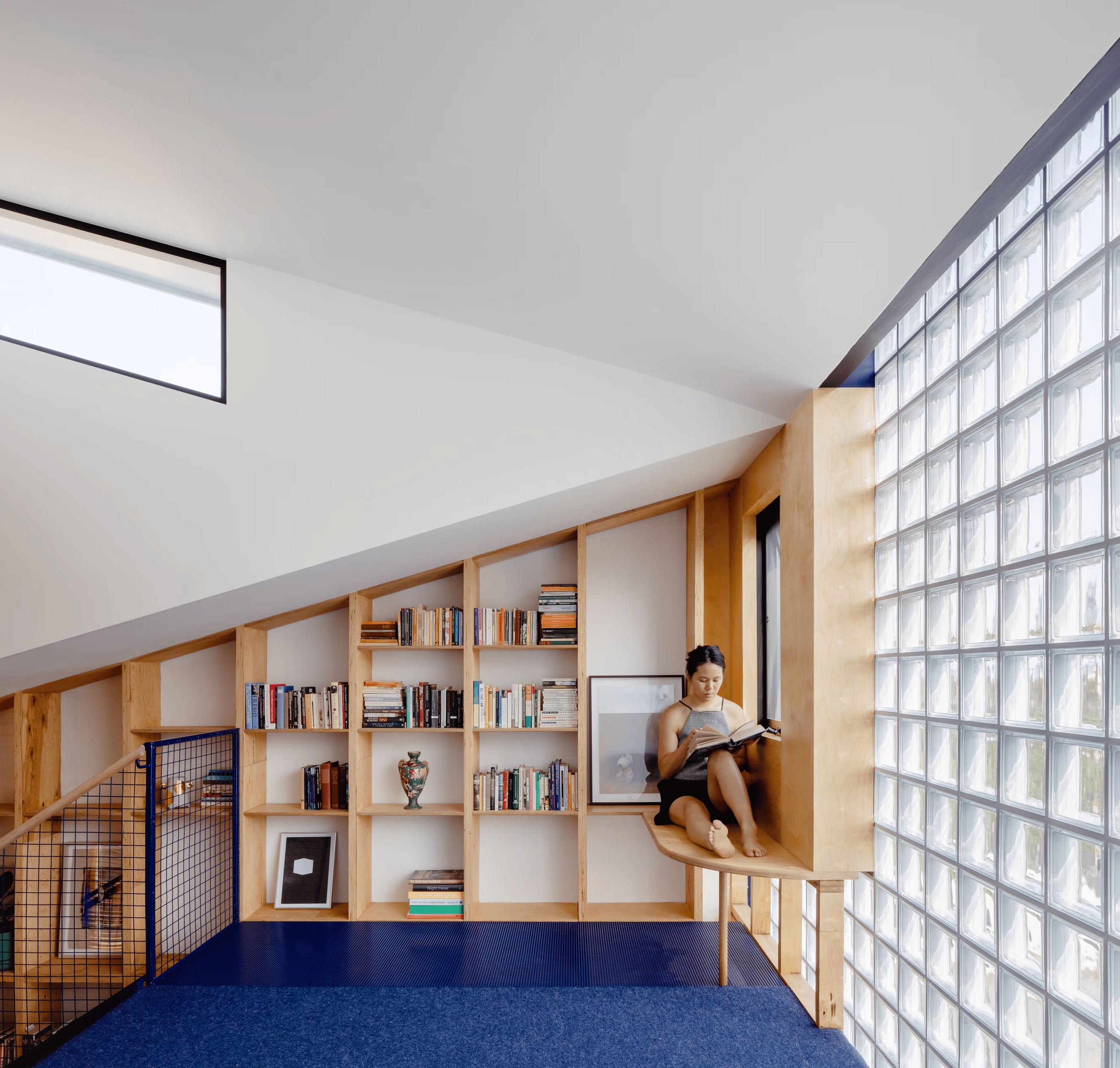
FF reading nook.
05

GF view of the structural bookshelf.
06
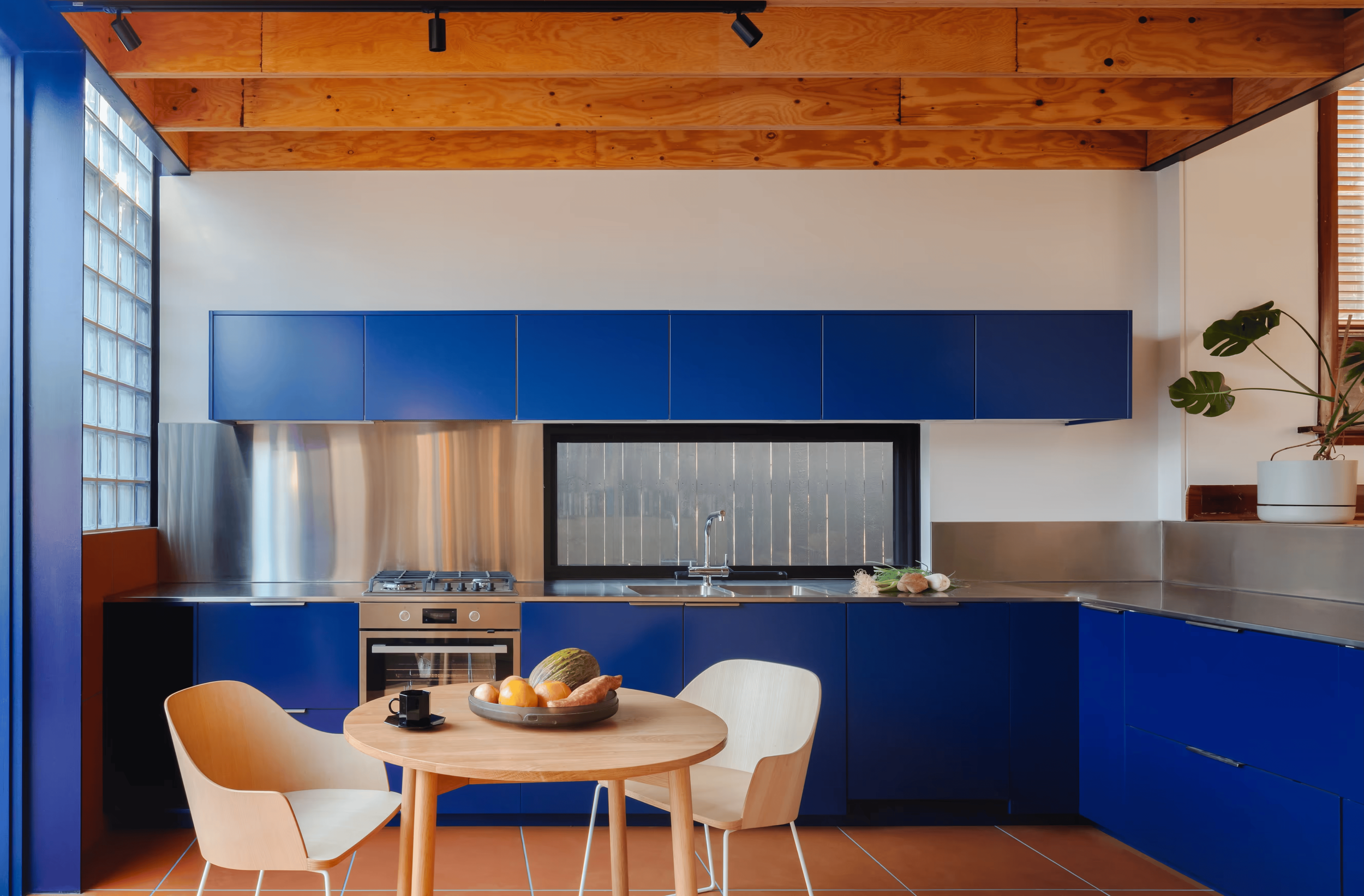
Exposed natural GF rafters contrasted by the stark blue kitchen cupboards.
07
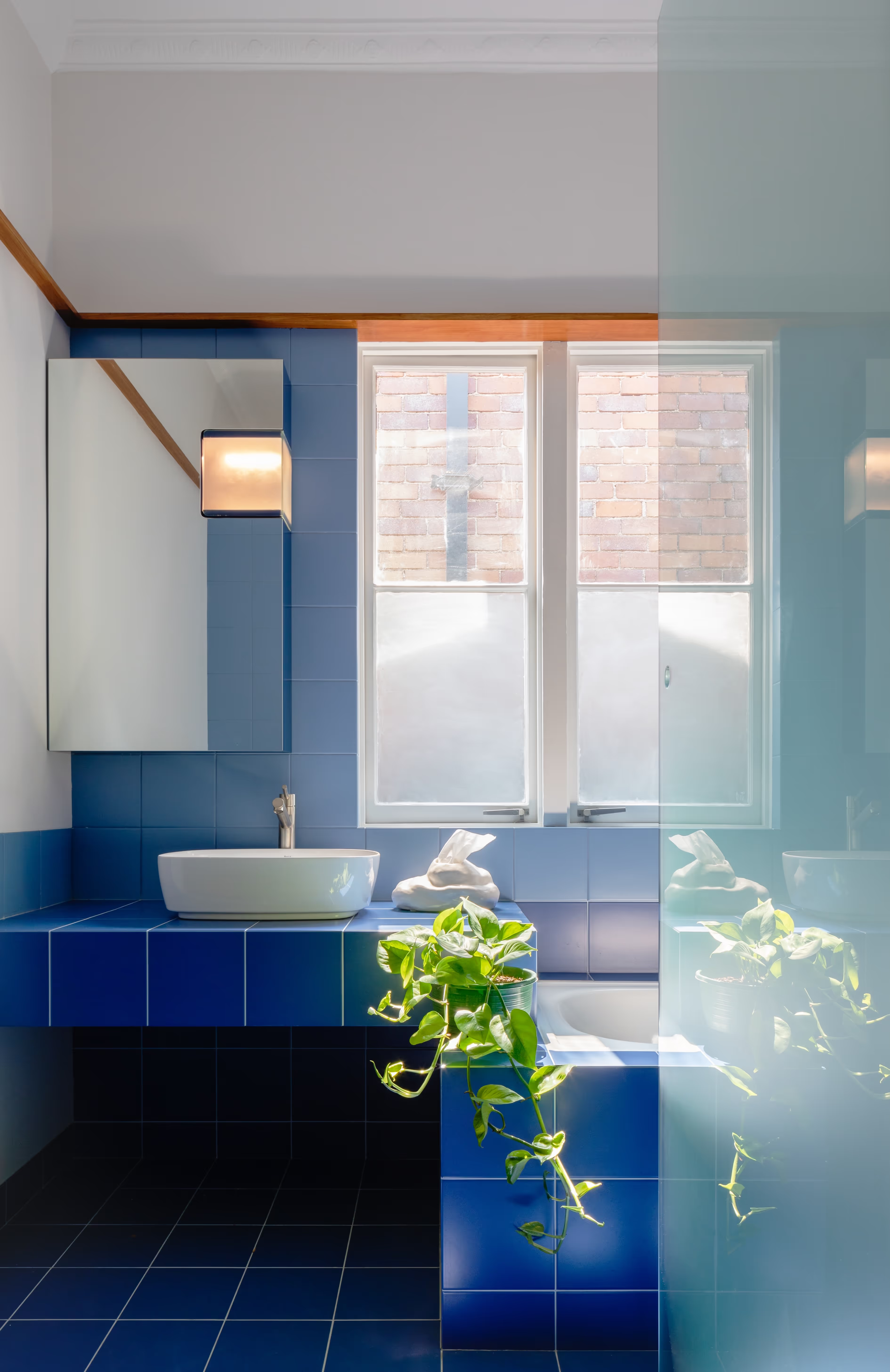
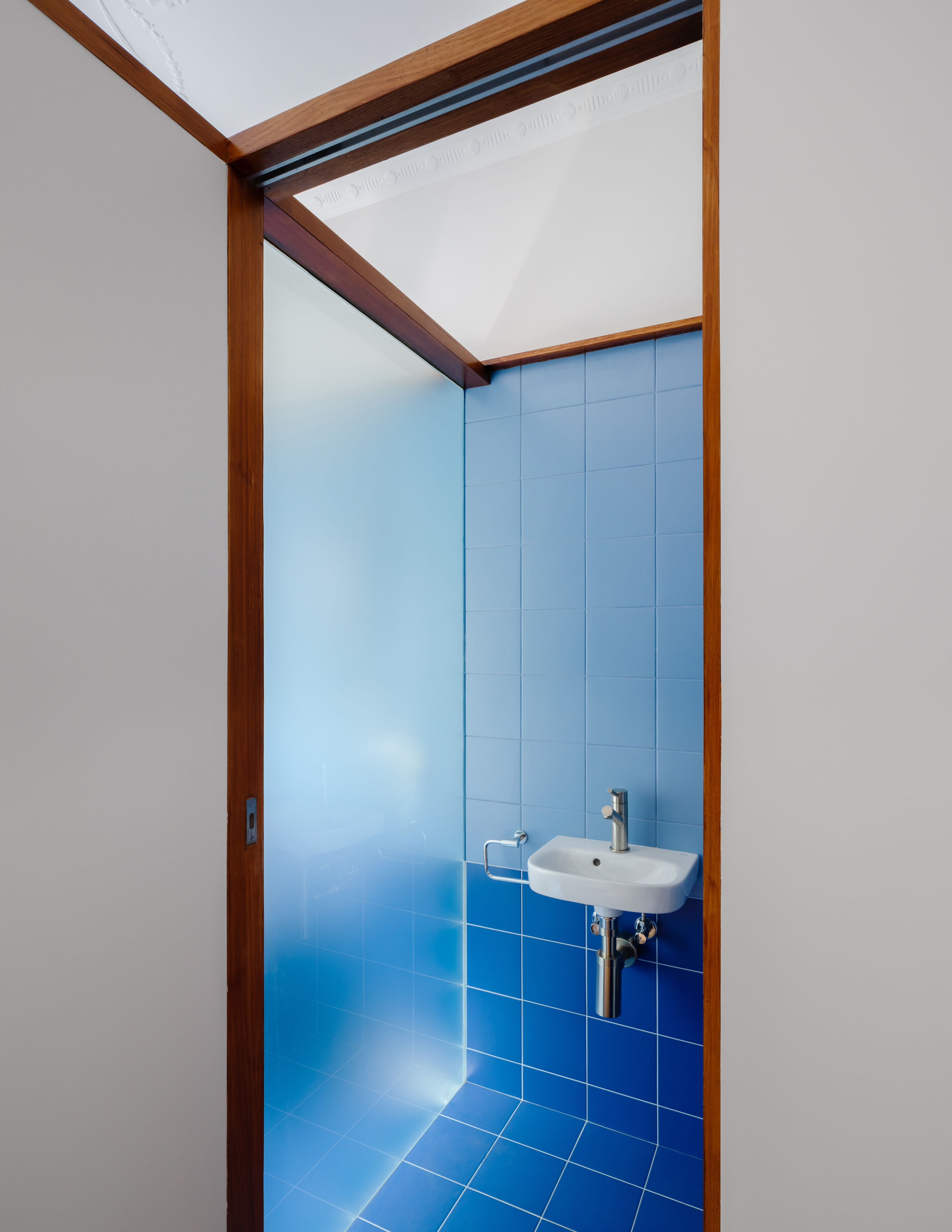
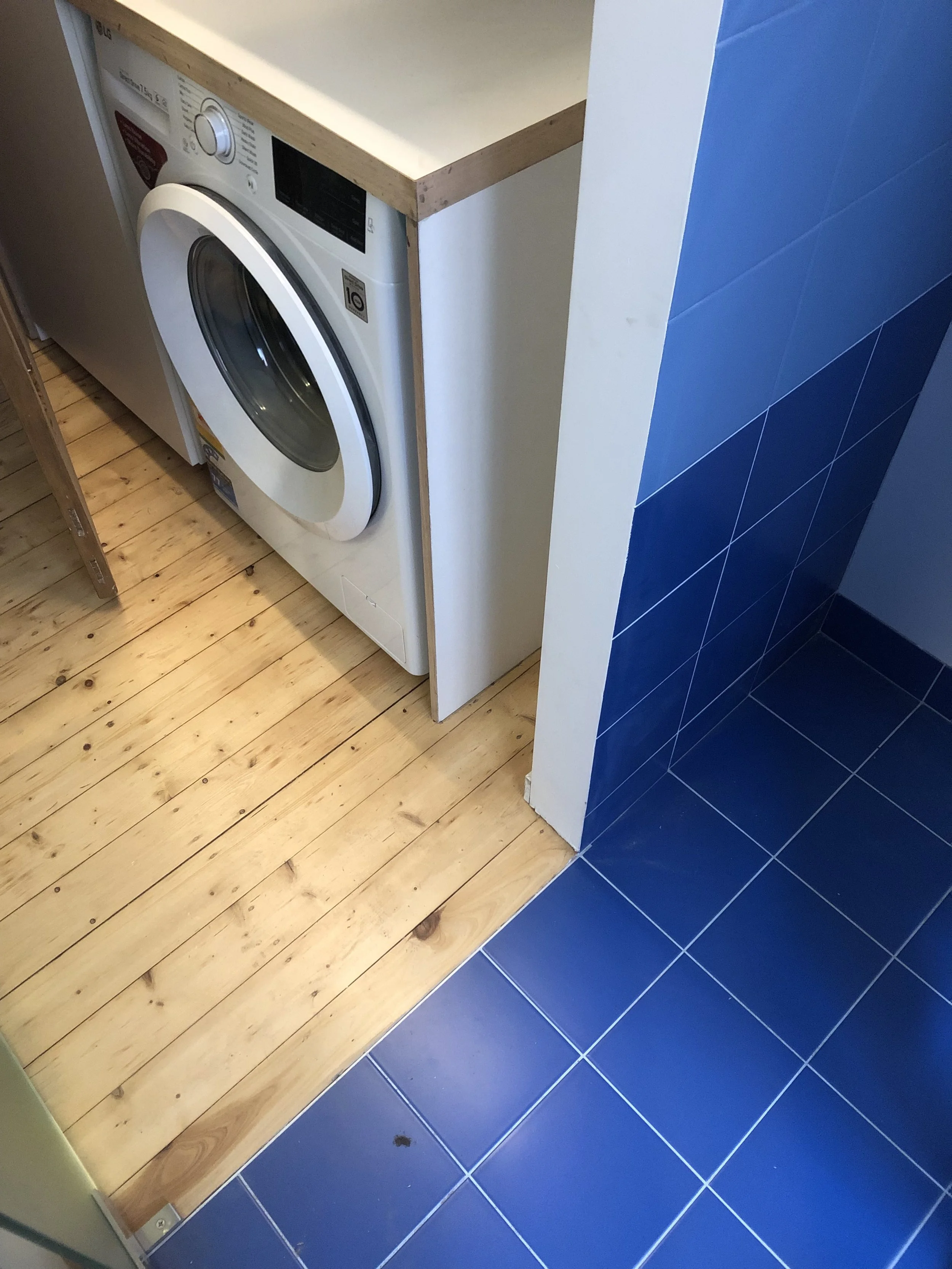
Multi-toned blue bathroom.
09
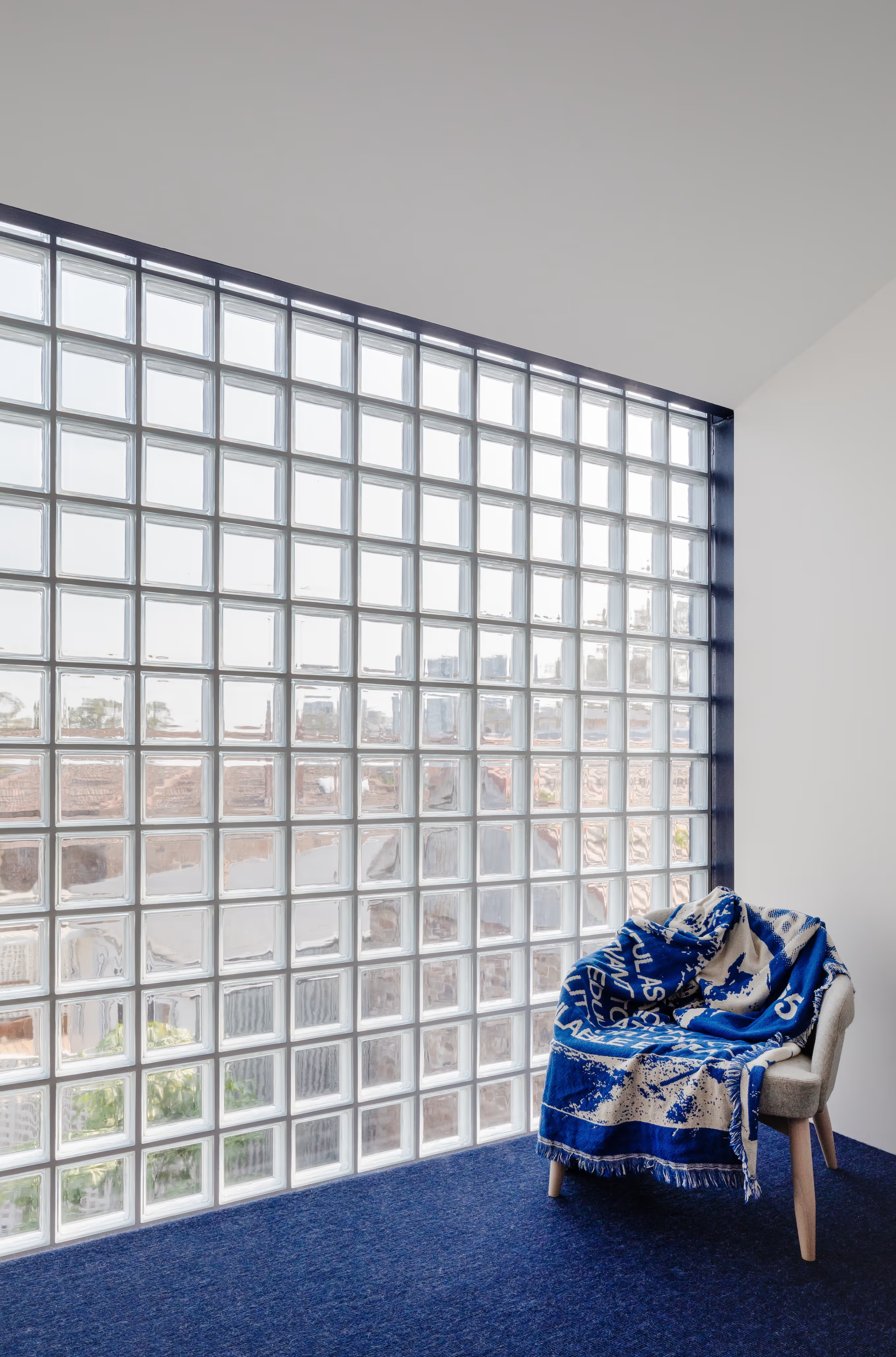
View out through the glass blocks.
08
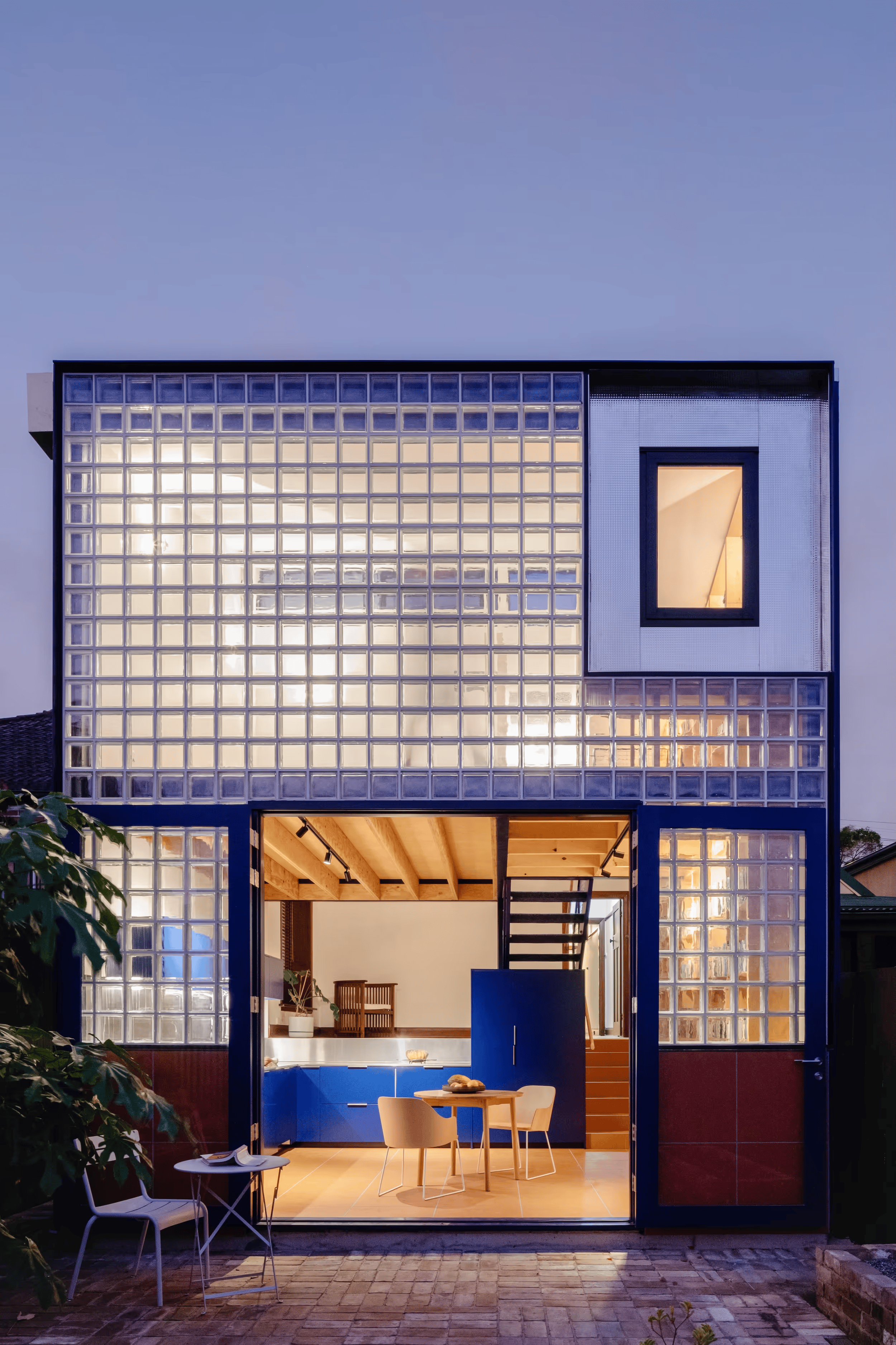
Glassbook at night.
10
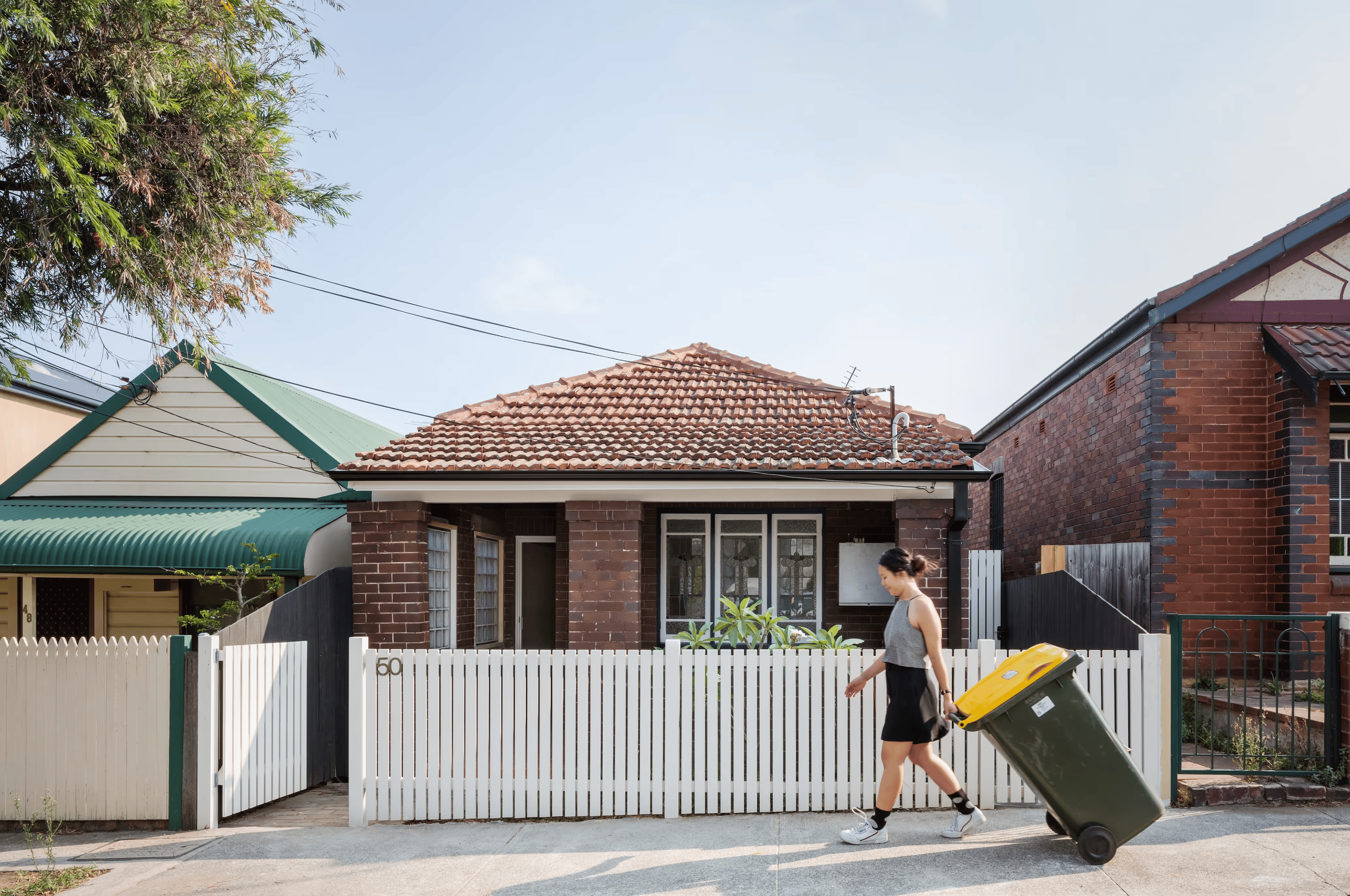
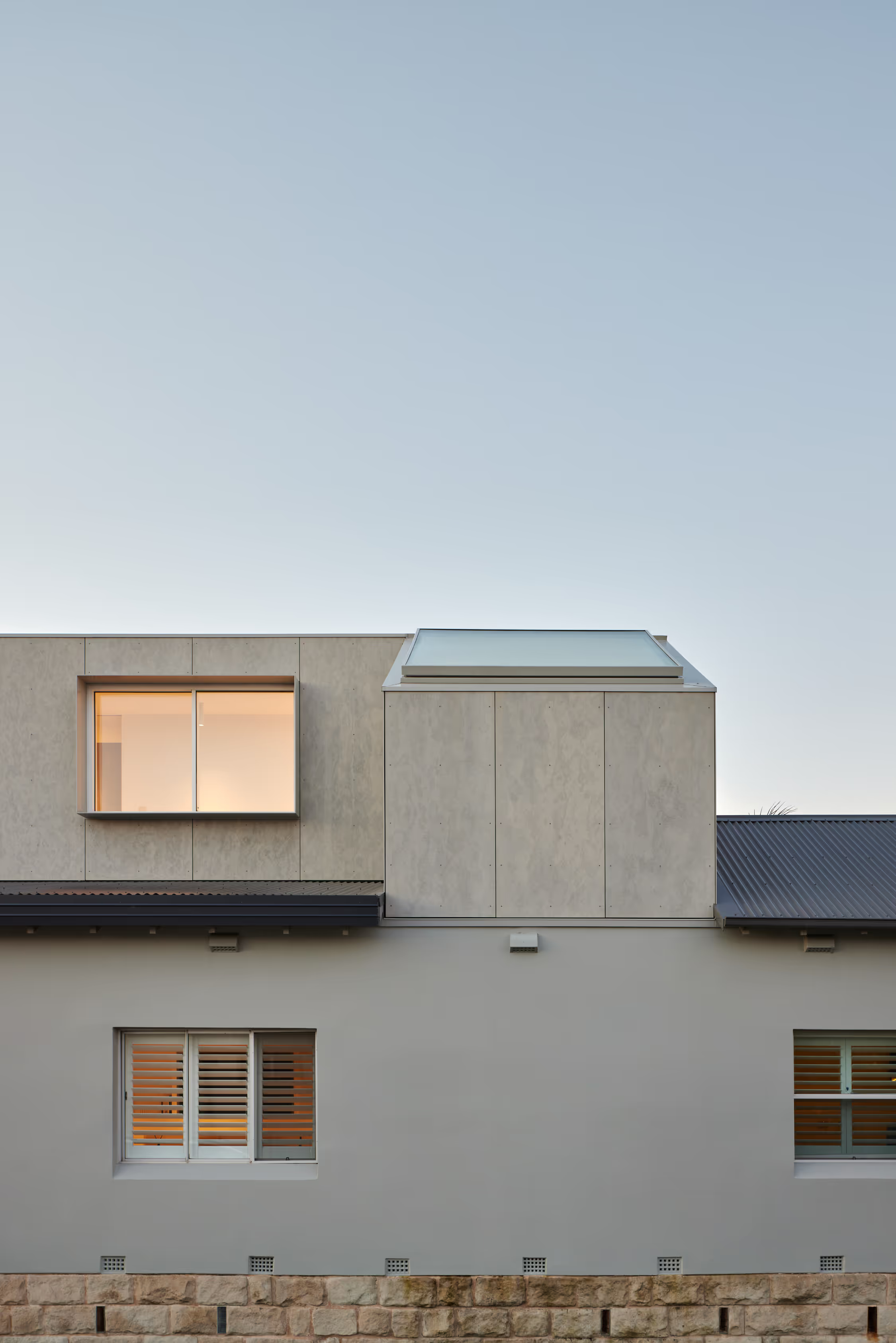
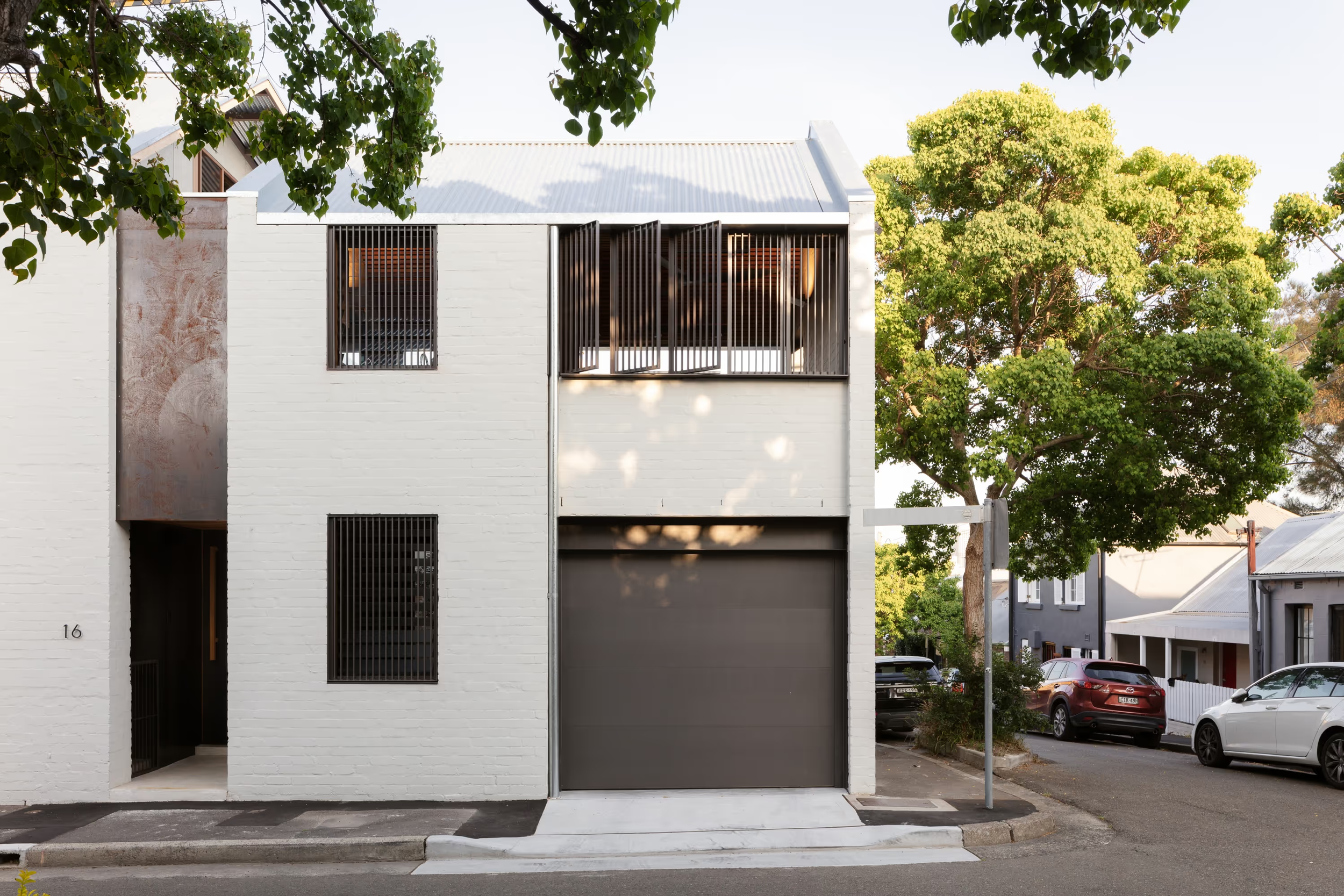
The unassuming street view of the home.
11
Our Impact
Working With the Landscape
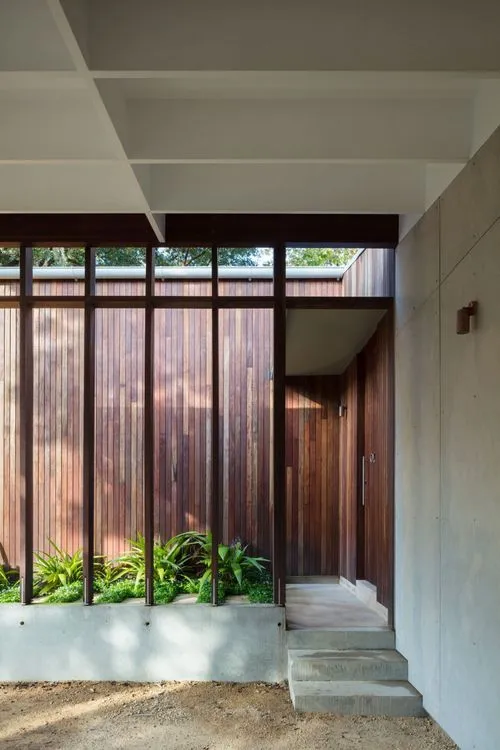
We preserved three mature gum trees and followed the site’s natural topography by stepping the house with the slope. Minimal excavation was required, a coordinated approach that respected the land and reduced intervention..
Built to Last
We used compressed fibre cement sheeting for the external cladding, selected for its durability, fire resistance, and low-maintenance performance in exposed conditions. Fixings and junctions were detailed and executed to last.
Material Decisions That Matter
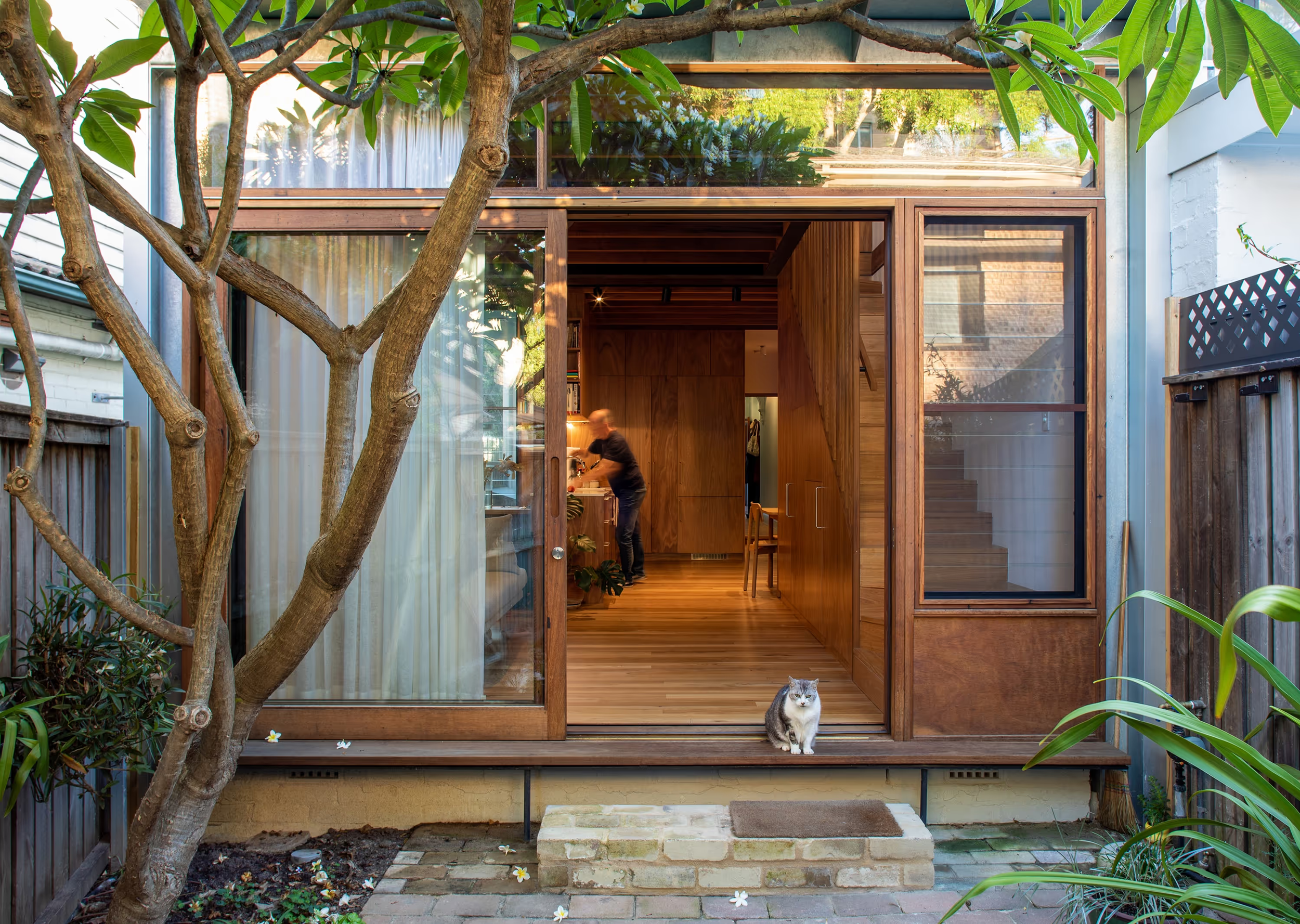
Double-glazed doors were fabricated using reclaimed Australian hardwoods. Salvaged in partnership with the architect, these were refinished and repurposed to deliver warmth, character, and performance, extending the life of materials that would otherwise be lost.
Reuse with Intention
A predominantly timber structure was sourced locally and pre-cut offsite before slab pour. This reduced on-site construction time, minimised waste, and lowered transport-related emissions.
Our Process
Pre-Construction
1
Early assessment focused on what could be retained, reused, or worked around. Reducing structural intervention and preserving heritage details. We value engineered the build through both strategic retention and thoughtful material selections, directing the budget toward the most impactful parts of the project without compromising quality or architectural intent.
Retained openings and ceiling features to avoid unnecessary demolition
Value engineering through both material choices and retained structure
Early structural assessment to inform sequencing and scope
Set-out and detailing aligned within existing conditions for exacting delivery
Early Works
2
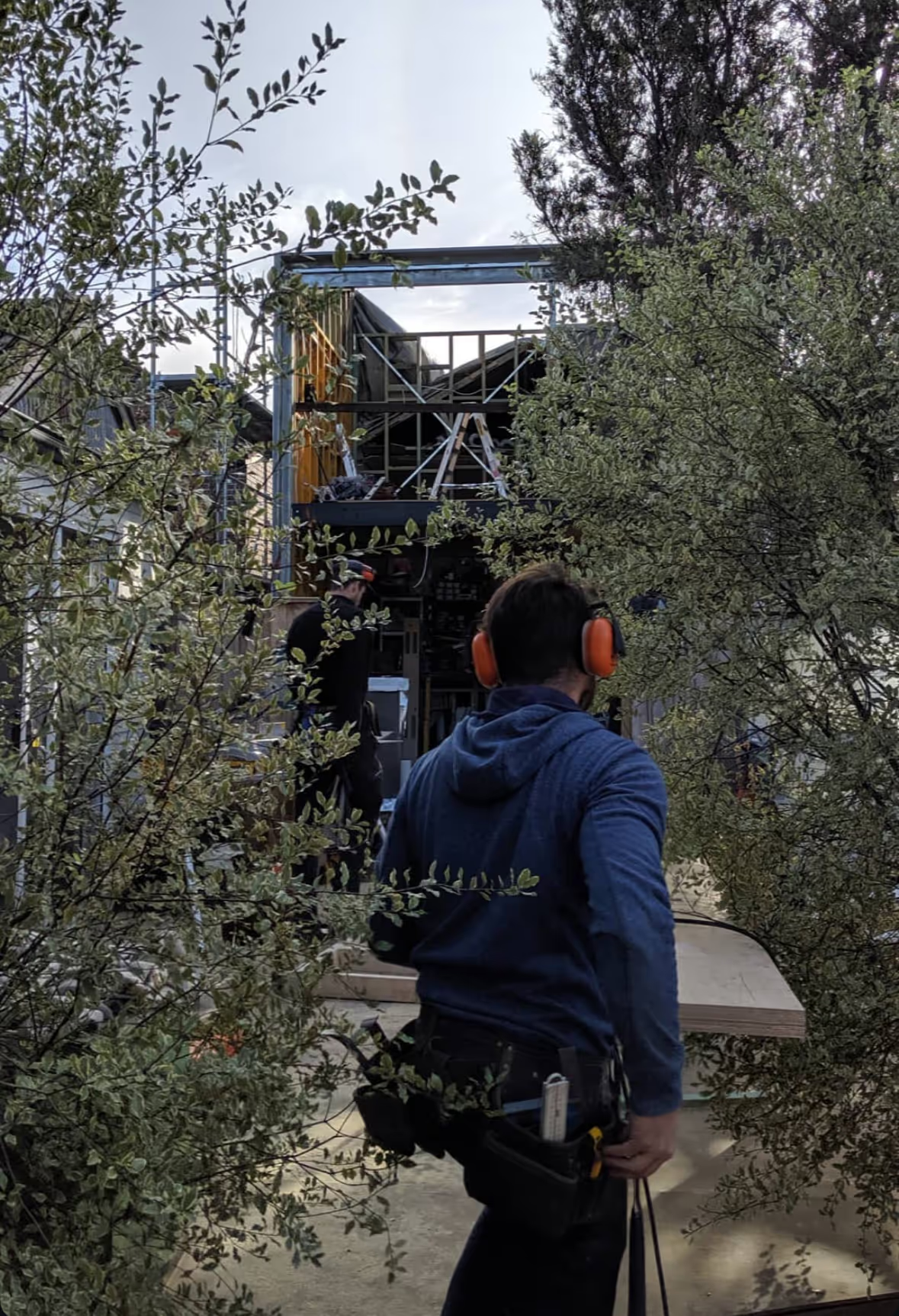
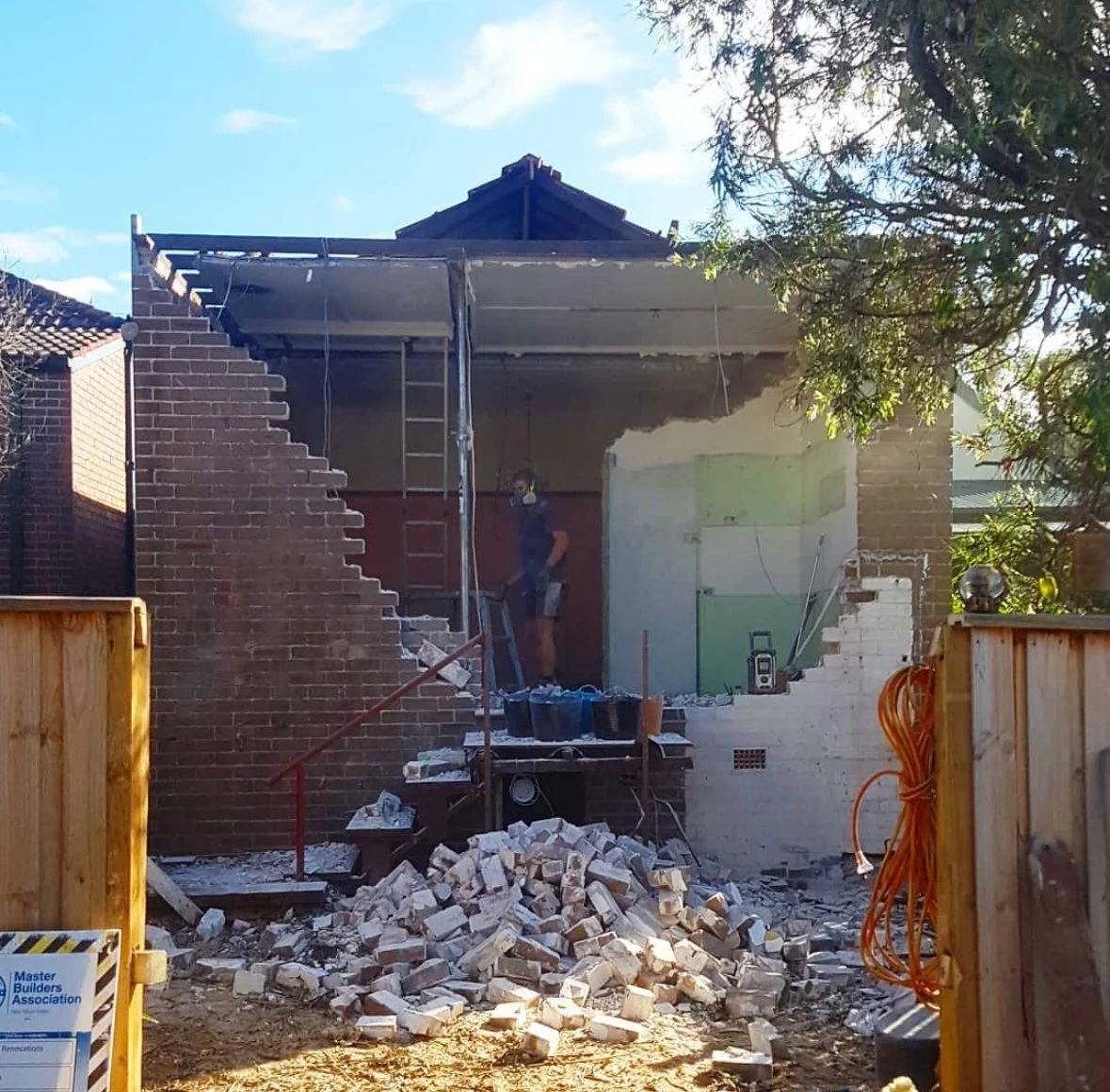
We approached early works as a surgical process dismantling rather than demolishing to allow for material reuse and minimise disruption. The lightweight rear structure meant excavation could be kept to a minimum, while retained rooms and heritage details were protected carefully throughout.
Deconstruction over demolition to salvage brick and timber
Lightweight rear addition reduced excavation and site disturbance
Structure
3
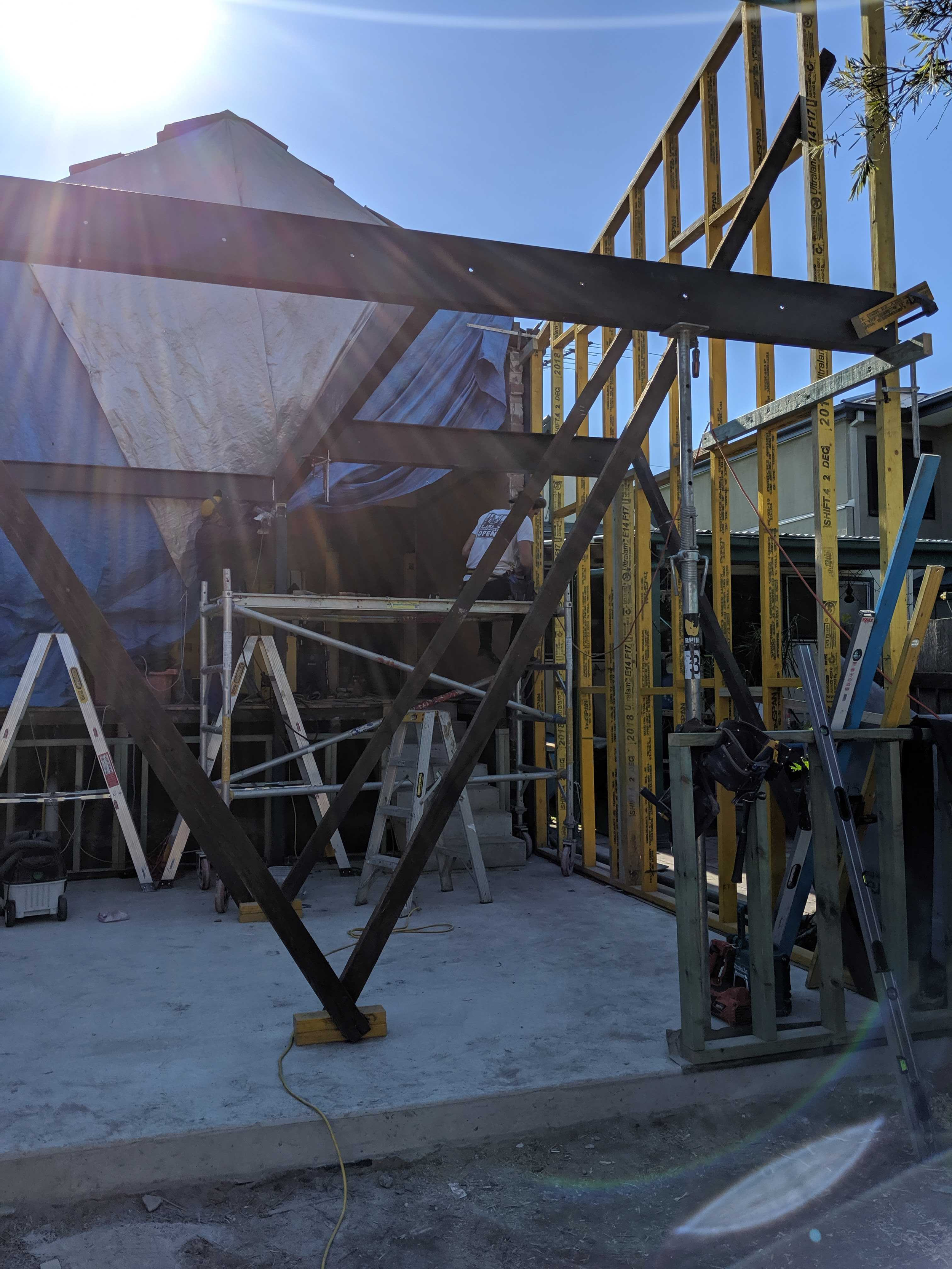
The structure was designed to do double duty with elements like the exposed bookcase acting as both feature and frame. The joists installed with joinery precision, left on show, structure and finish delivered in one move. A double-height steel portal was installed with millimetre precision to support the glass block façade, requiring exact set-out and careful sequencing
Bookcase built as structural element and detailed to remain exposed.
Structural elements exposed as final surfaces
Enclosure
4
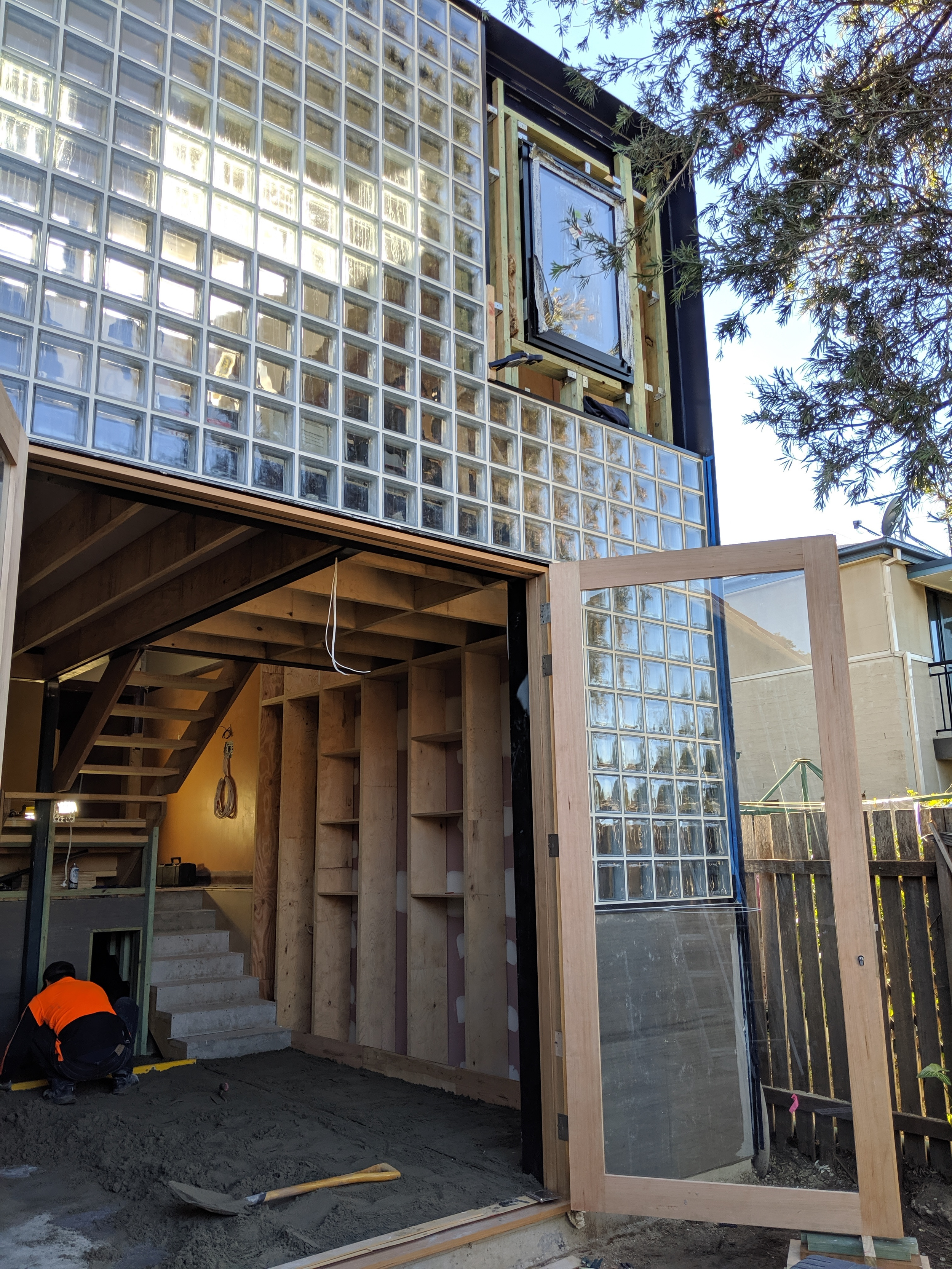
The enclosure was designed for performance and longevity. A full-height glass block façade filters light while reducing external noise, supported by a wall build-up tailored for acoustic insulation. Low-maintenance cladding and double-glazed units ensure the new addition feels robust, quiet and clearly connected yet respectfully distinct from the existing house.
Glass block façade balances privacy, light, and acoustic control
Fibre cement cladding selected for durability and minimal upkeep
Wall interfaces detailed to transition cleanly between old and new
Interiors
5
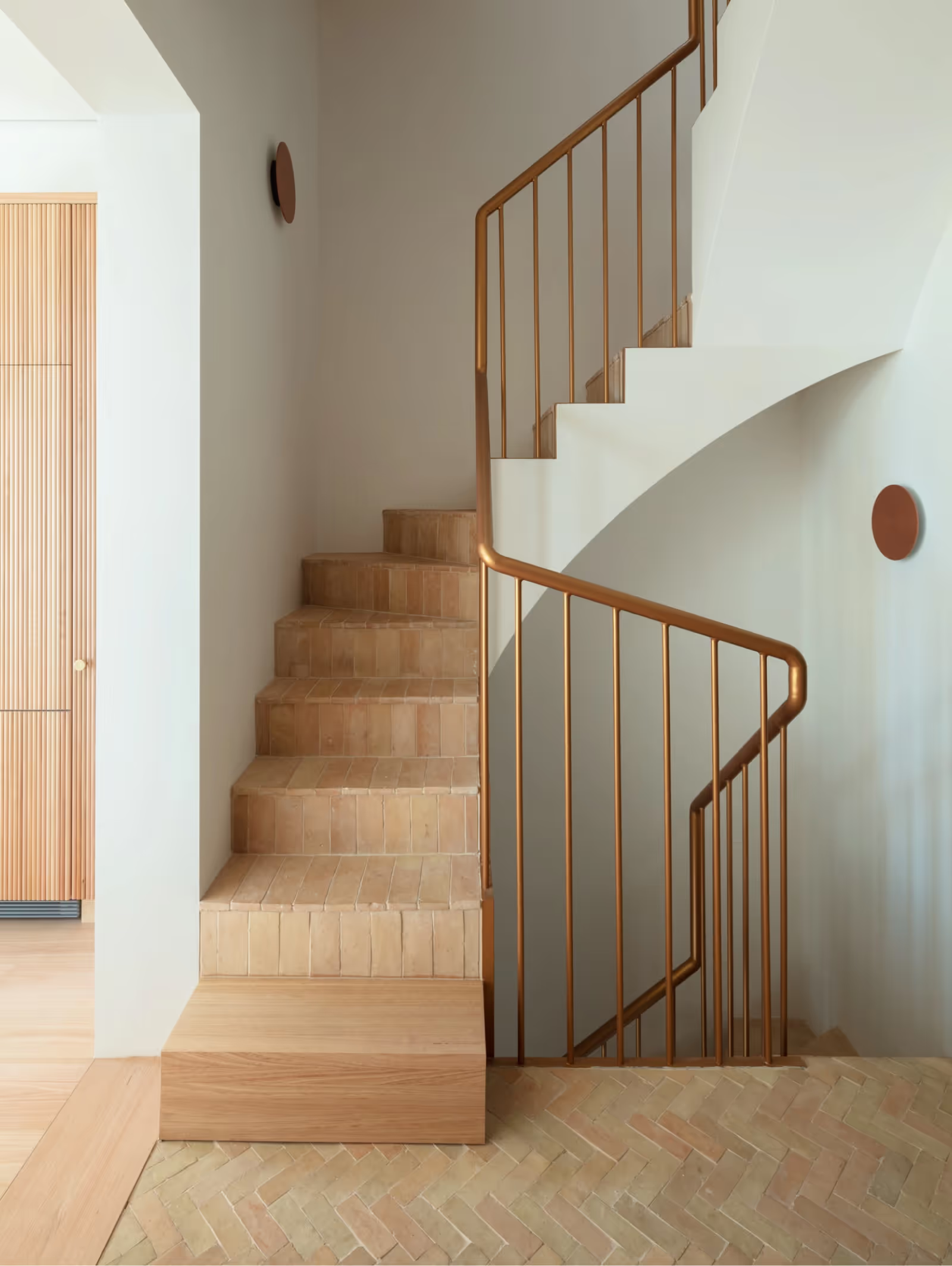
A bold colour palette and exposed finishes allowed modest materials to shine. We retained and refinished the existing timber floors, while new elements like tiled thresholds and structural shelving were executed with precision to create clean lines and thoughtful transitions between old and new.
Existing fabric protected throughout and re-finished post-works
Colour and detailing used to elevate modest materials and structure
Aftercare
6
Years on, we’ve remained closely involved with the home, returning for seasonal maintenance, upgrades, and small improvements. From repainting and electrical tweaks to repairs and system add-ons, our aftercare ensures the home continues to function beautifully, long after handover
Ongoing care and maintenance of building materials and systems
Minor works and improvements completed as needs evolve
Continued client relationship built on trust and responsiveness
Existing finishes and internal rooms carefully protected during works
Steel portal precisely set out to frame glassblock facade
Seamless yet clear transitions between retained and new elements
Recognition
Awards
MBA Excellence in Housing - Additions/Alterations/Renovations Winner Glassbook House 2020Publications
A Home for Reading – Glassbook House by Sibling Architecture The Local Project Glassbook House 2020 Glassbook House / Sibling Architecture ArchDaily Glassbook House 2020 Glassbook House by Sibling Architecture Architecture, Au Glassbook House 2020 A Book Lover’s Cottage in Australia Captures Light With a Glass-Block Facade Dwell Glassbook House 2020 A Striking Sydney Home Designed For Book-Lovers The Design Files Glassbook House 2020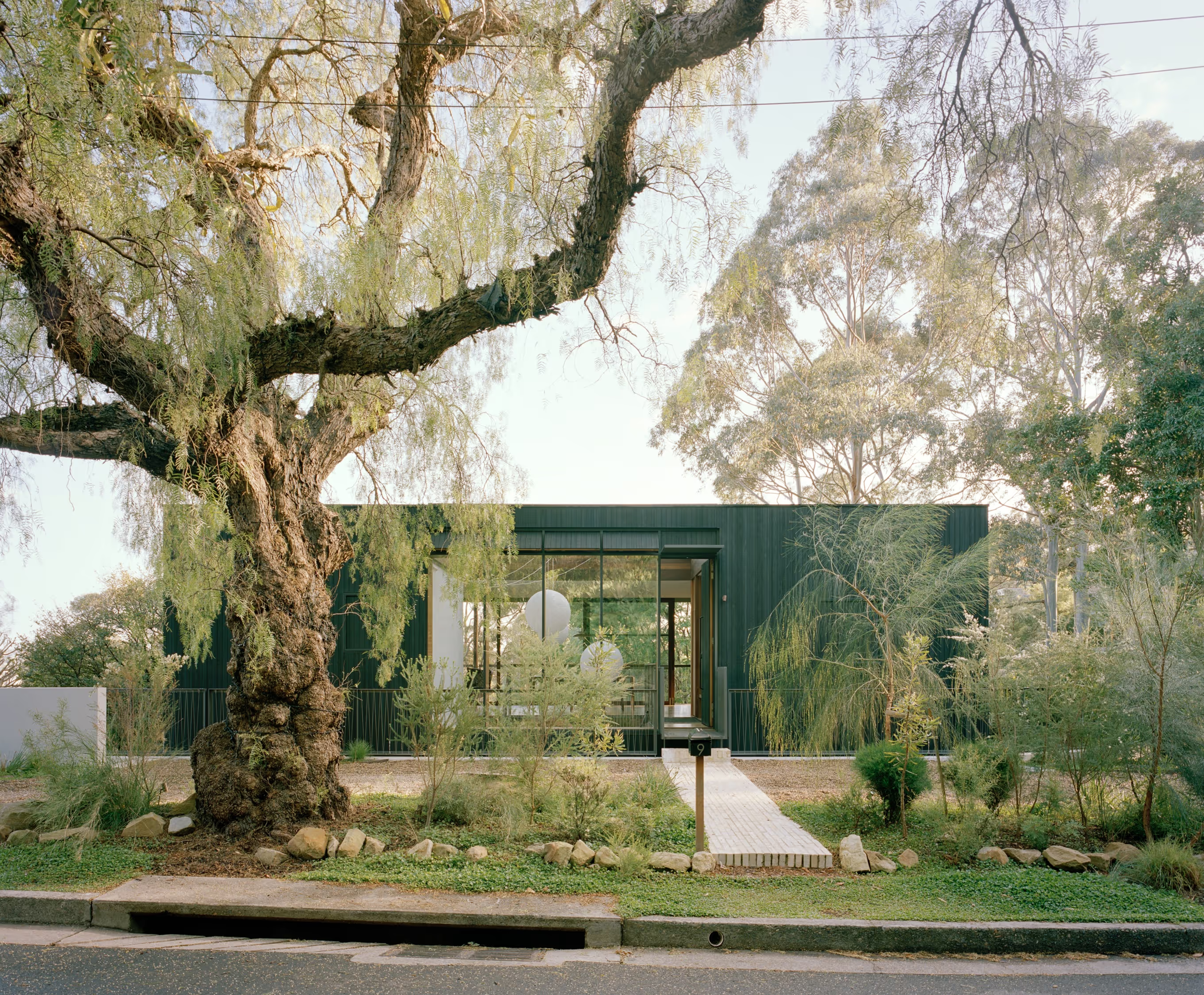
Projects